The Real Cost of Waiting: Why January Installations Save You Money (and Stress)
The Real Cost of Waiting: Why January Installations Save You Money (and Stress)
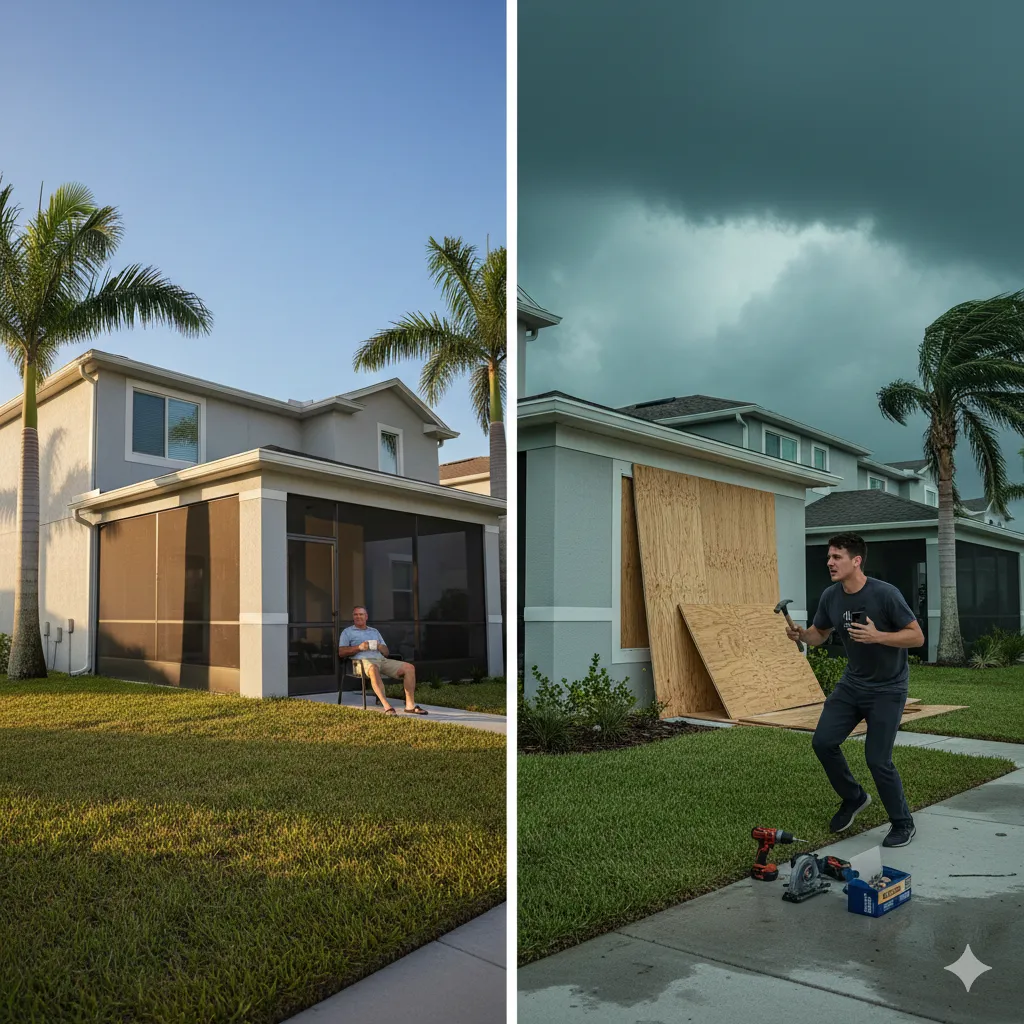
Two homeowners. Same investment. Completely different experiences.
The Calls Start Coming in Late May
At first, just a trickle. Homeowners who noticed the calendar, who remembered last year's close call, who finally decided to stop putting it off. They are pleasant calls. Unhurried. The conversations meander through options and timelines, questions answered thoroughly, consultations scheduled at mutual convenience.
By June, the trickle becomes a stream. The callers sound different now—a note of urgency threading through their questions. How soon can you get someone out here? The answer—three weeks, maybe four for the initial consultation—lands with visible disappointment. They had hoped for something faster.
Then a system forms in the Atlantic.
The phones do not stop ringing. Voicemails stack up faster than anyone can return them. The callers are no longer asking about options or timelines. They are asking if anything is possible. The edge in their voices is unmistakable—not panic, exactly, but something close to it. The recognition that they are calling too late, that the window they assumed would stay open has quietly closed.
This is the rhythm of every hurricane season, as predictable as the storms themselves. And every year, the pattern produces the same two groups of homeowners: those who spent the summer protected and calm, and those who spent it waiting, watching, hoping the next system would curve away.
The difference between these two groups is rarely wealth or luck or circumstance. It is almost always timing. When they decided to act. Whether they chose the quiet months or the loud ones. Whether they made their decision from thoughtfulness or from fear.
Two Mornings, Six Months Apart
Picture two homeowners. Call them the Martins and the Delgados. Same neighborhood, similar homes, identical need for hurricane protection. What separates them is when they picked up the phone.
The Martins called in January. A quiet Tuesday morning, coffee still warm, no urgency in the air. They had been meaning to do this for two years—ever since their neighbors' lanai was destroyed by a storm that barely qualified as a Category 1. The holidays had given them time to talk it over, to agree that this would be the year they stopped putting it off.
The consultation happened the following week. The representative walked their property in mild January sunshine, measuring openings, explaining options, answering questions they had been accumulating for months. There was time to compare proposals. Time to verify certifications. Time to read the warranty language carefully, to understand exactly what they were buying.
By late February, installation was complete. The screens worked beautifully—smooth deployment, solid construction, the quiet satisfaction of a decision well made. When their insurance agent submitted the wind mitigation documentation, their premium dropped by several hundred dollars annually. By the time NOAA released its seasonal forecast in May, the Martins had already been protected for three months. They read the headlines about an "above-average season" with interest rather than anxiety.
Now picture the Delgados. Same neighborhood, same need. But they called in June.
They had meant to call earlier. January came and went, busy with other things. February slipped past. March and April disappeared into work deadlines and family obligations. By May, they were thinking about it again—and then June arrived, and a tropical wave off the African coast suddenly had everyone's attention.
The Delgados called on a Monday morning. They reached voicemail. When someone called back Tuesday afternoon, they learned that initial consultations were booking into mid-July. Installation, assuming they moved forward promptly, would be late August at the earliest. Maybe September.
But hurricane season started June 1, Mrs. Delgado said. We need this now.
The representative was sympathetic. They heard this every day, this time of year. But the schedule was the schedule. The crews were already stretched thin. Every homeowner who called in June wanted installation in June, and the math simply did not work.
The Delgados spent that summer the way millions of homeowners spend it: watching the Weather Channel with a knot in their stomachs, checking the National Hurricane Center updates more often than they wanted to admit, mentally rehearsing their plywood-and-prayer backup plan every time a system drifted toward the Gulf.
Their screens were finally installed in early September. By then, they had lived through two near-misses that sent them scrambling for supplies, one sleepless night when the forecast models disagreed about whether their county was in the cone, and an argument about whether they should have just gone with the cheaper option to speed things up.
Same investment as the Martins. Same protection. Completely different experience getting there.
The Contractor Calendar Nobody Tells You About
Understanding why the Delgados' experience differed so dramatically from the Martins' requires understanding how the hurricane protection industry actually works.
Installation companies operate on seasonal rhythms as predictable as agriculture. Winter represents the quiet season—demand for contractor services is typically lower, with crews more available and schedules more flexible. Homeowners who call during these months often find themselves pleasantly surprised: consultations happen within days, not weeks. Installation slots are plentiful. The entire process feels collaborative rather than competitive.
Spring changes the dynamic. The homeowners who procrastinated through winter begin calling. Those who promised themselves they would "handle it before hurricane season" suddenly notice that hurricane season is approaching. By April and May, qualified installers are booking weeks, sometimes months in advance. The Martins' leisurely experience becomes unavailable. What remains is the Delgados' experience—waiting lists and compromises.
Then comes summer—peak season for the broader contractor market, with the nicest weather and highest demand converging. For hurricane protection specifically, demand becomes acute. As hurricanes approach, installation wait times can stretch for weeks. Popular products may be backordered. The installation that would have taken two weeks in January stretches across months as crews work through accumulated demand.
Here is what nobody tells you when you are putting off the decision: the same installation costs more in terms of stress, time, and sometimes money when you wait. Not because the product changed. Not because the installers became less skilled. Simply because you are now one of thousands of homeowners all wanting the same thing at the same time, instead of one of the few who planned ahead.
The Money You Leave on the Table
The Martins did not just buy peace of mind. They bought it at a better price.
Winter installation frequently comes with tangible financial advantages. Many contractors offer off-season discounts—often 5-15% off standard rates—to keep their crews busy during slower months. The negotiating dynamic shifts in the homeowner's favor when schedules are open rather than packed.
Materials, too, sometimes cost less. Many suppliers lower prices during winter months to clear inventory before the spring rush. The homeowner who purchases in January may access identical products at reduced prices—same protection, smaller check.
But the most significant financial difference involves insurance.
Florida law requires insurers to offer wind mitigation discounts for homes with documented hurricane protection. These discounts can reduce premiums by up to 50%, depending on the specific features installed and the insurance carrier's rate structure.
Here is where timing becomes expensive: those discounts apply from the date your protection is documented and submitted to your insurer. Not before. The Martins, protected in February, began saving in March. The Delgados, protected in September, lost six months of premium reduction they could have captured had they acted when the Martins did.
Run the numbers on a $4,500 annual premium with a 25% wind mitigation discount. That is $1,125 saved per year. A six-month delay costs roughly $560 in lost savings—money that was available for the taking, forfeited to procrastination. Over a decade of homeownership, the compound cost of waiting grows substantial.
The Martins and the Delgados wrote checks for similar amounts. But the Martins' total cost of protection was meaningfully lower, because they started receiving the financial benefits sooner.
Why We Wait (Even When We Know Better)
If the case for January action is so clear, why do so many homeowners end up as Delgados rather than Martins?
Because we are human. And humans are remarkably consistent in how we handle decisions that feel large, complicated, or uncomfortable.
The research calls it procrastination, but that clinical term obscures what is actually happening. Procrastination is not laziness or poor time management—it is a failure of emotional regulation. When a task triggers discomfort—confusion, anxiety, overwhelm—we instinctively seek relief by turning away. The relief is immediate. The consequences are delayed. And so we delay.
Hurricane protection triggers every one of these discomfort signals. It is a significant financial commitment. It requires understanding technical specifications most homeowners have never encountered. It means confronting uncomfortable truths about vulnerability—acknowledging that the home you love could be damaged, that the family you would do anything to protect faces real risk.
No wonder we find reasons to postpone.
We should get a few more quotes. We need to think about it. Let's wait until after the holidays. Until after tax season. Until we see what the forecast says.
Each delay feels reasonable in the moment. Each buys a small dose of relief from the discomfort of deciding. And then May arrives, and June, and suddenly the procrastination that felt harmless has become genuinely costly.
Here is what the research shows about this pattern: procrastinators experience lower stress early in a timeline, but significantly higher stress as deadlines approach. The Delgados felt fine in February—no pressure, no urgency, plenty of time. By July, they were anxious and frustrated, kicking themselves for not acting sooner, making rushed decisions under conditions they could have avoided entirely.
This is the trap. The relief we buy by delaying is borrowed against future stress, with interest.
The Decision You Make Under Pressure Is Rarely Your Best One
There is a particular quality to decisions made in calm versus decisions made in crisis.
The Martins sat at their kitchen table in January, proposals spread before them, comparing options without urgency. They had time to research the manufacturer's reputation, to verify the certifications actually meant what the salesperson claimed, to read online reviews from homeowners who had lived with the product through actual storms. They asked questions, received thorough answers, and asked follow-up questions. When they signed the contract, they felt confident.
The Delgados signed their contract in July with a tropical system spinning in the Atlantic. They had received three quotes, but barely had time to compare them—two of the companies could not install until October anyway. They went with the one that could get them protected soonest, which happened to be the most expensive option. Did they research thoroughly? Not really. Did they read every line of the warranty? They meant to, but things were moving fast.
Research on disaster decision-making confirms what intuition suggests: stress degrades our ability to think clearly. When we feel threatened, the mind prioritizes speed over thoroughness. Excellent adaptation for escaping immediate physical danger. Terrible adaptation for making five-figure investments in home protection systems.
The Delgados got the same basic outcome—their home was protected before the season ended. But they paid more, felt worse during the process, and never quite shook the nagging sense that they might have made better choices with more time to think.
What January Actually Feels Like
Let us be specific about what the Martins' experience looked like, week by week.
Early January: They called MaxForce on a Wednesday. By Friday, a consultation was scheduled for the following Tuesday. No waiting list. No competition with hundreds of other homeowners for limited slots.
Mid-January: The representative arrived on time, spent ninety minutes walking the property, answered every question without rushing. The Martins mentioned they were considering other companies. Take your time, the representative said. Compare carefully. This is an important decision. There was no pressure because there was no deadline creating artificial urgency.
Late January: After comparing three proposals and speaking with references from each company, the Martins selected MaxForce. The contract was straightforward. The timeline was clear: permitting would take approximately two weeks, manufacturing another three to four weeks, installation scheduled for late February.
February: Permitting moved faster than expected—winter months often mean less backlog at municipal offices. Manufacturing proceeded on schedule. The installation team arrived on a Thursday morning, worked efficiently through mild Florida weather, and completed the job Friday afternoon. The Martins received training on operation and maintenance, documentation for their insurance company, and warranty information for their files.
March and beyond: The Martins' insurance company processed the wind mitigation documentation within weeks. Their premium dropped starting with the next billing cycle. When hurricane season officially opened on June 1, they had been protected for over three months.
This is what January makes possible: a process that feels organized, unhurried, and collaborative. Not because hurricane protection is inherently stressful—it is not—but because the seasonal dynamics either work for you or against you, depending on when you enter the process.
The Gift You Give Your Future Self
There is a concept in psychology about how we relate to our future selves. Often, researchers note, we treat our future selves like strangers—people whose problems are not quite our concern. We borrow against their time, their money, their peace of mind, because the costs feel abstract and distant.
The homeowner who waits is borrowing from their July self, their August self, their September self. Borrowing the calm those future selves could have enjoyed. Borrowing the money those future selves would have saved. Borrowing the clear-headed decision-making that would have been available had decisions been made in quieter months.
The homeowner who acts in January is doing something different. They are giving a gift to their future self. The gift of watching storm forecasts with curiosity instead of dread. The gift of knowing that whatever the Atlantic produces, their home is ready. The gift of having made this decision well, thoroughly, in conditions that allowed for their best thinking.
The Martins and the Delgados both love their families. Both want to protect their homes. Both, eventually, made the same investment in hurricane protection. But the Martins gave themselves something the Delgados could not buy at any price: the experience of having done this the right way, at the right time, without the stress and compromise that waiting inevitably creates.
The Invitation
January is open. The calendar is clear. Contractors who will be overwhelmed by May are available now, ready to answer your questions, walk your property, explain your options without the pressure that summer brings.
This is not urgency. There is no storm forming, no deadline bearing down. This is simply the truth: the homeowners who navigate hurricane season with the least stress are those who made their decisions in the quiet months. Every year, without exception.
MaxForce offers complimentary consultations to homeowners ready to understand their options. No obligation, no pressure—just information delivered by professionals who have seen both the January experience and the June experience, and who know which one serves families better.
You can be the homeowner who calls in June, competing for limited slots, making compressed decisions, spending the summer anxious about whether your protection will be installed before the next system forms.
Or you can be the homeowner who called in January. Protected by spring. Insurance savings already accumulating. Watching the seasonal forecasts with the calm that comes from having handled this well.
The investment is the same either way. Only the experience differs.
And the experience, as any homeowner who has lived through both will tell you, differs enormously.
MaxForce Hurricane Screens. Category 5 Certified. American Made.
No Blowouts. No Rewraps. No Compromise.