Motorized Hurricane Screen
Why Maxforce

MAXFORCE PROVEN PROTECT
Engineered For Excellence
For nearly two decades, MaxForce has manufactured hurricane screens to meet the most demanding building code, the High Velocity Hurricane Zone of Miami-Dade. The MaxForce track is our newest version of the fixed track we have used with great success for high wind applications all over the globe.
The benefits of a fixed track are unmatched strength - this is important when designing a screen system for hurricanes. When you want the strongest system available, and a proven veteran of many hurricanes, the MaxForce Hurricane Track is your best choice.
MAXFORCE THE #1 MOTORIZED HURRICANE SCREEN
Contact A+ Certified MaxForce Screen Dealer Today...
MAXFORCE HURRICANE SCREENS
Engineering Features
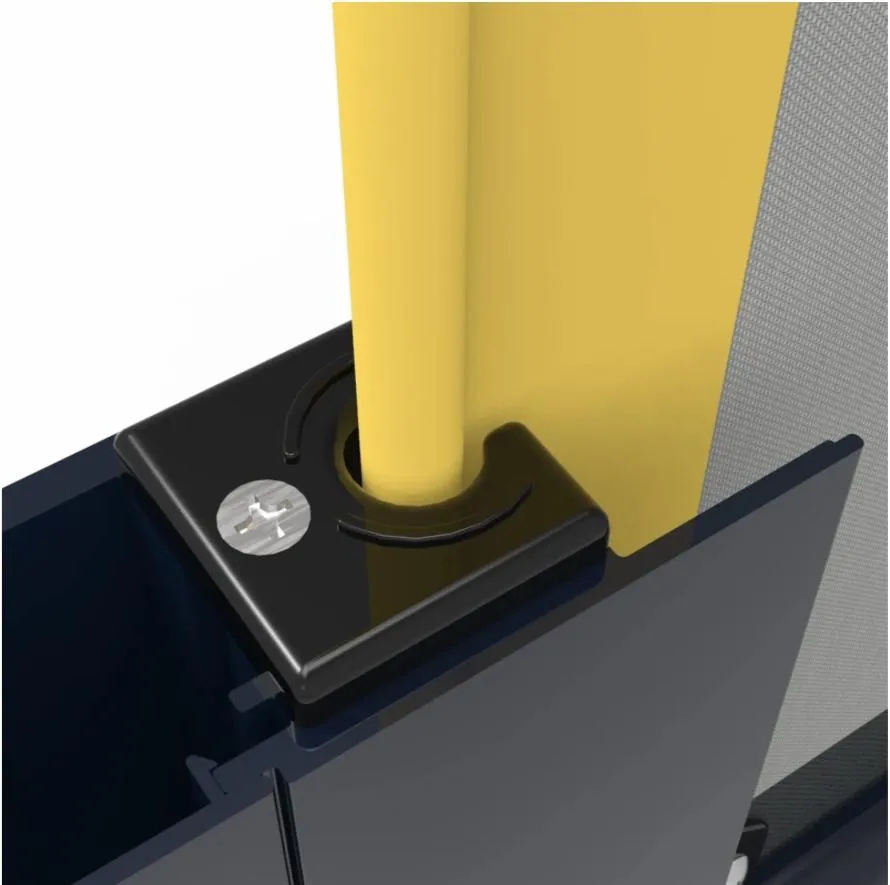
No blowouts. No rewraps. No frustration.
MaxForce is the only retractable screen system on the market designed to stay locked in the track—even in high winds. Smart motor senses resistance and adjusts seamlessly, allowing self-correction when the screen encounters an obstacle: Fewer snags, fewer jams, and fewer costly service calls.
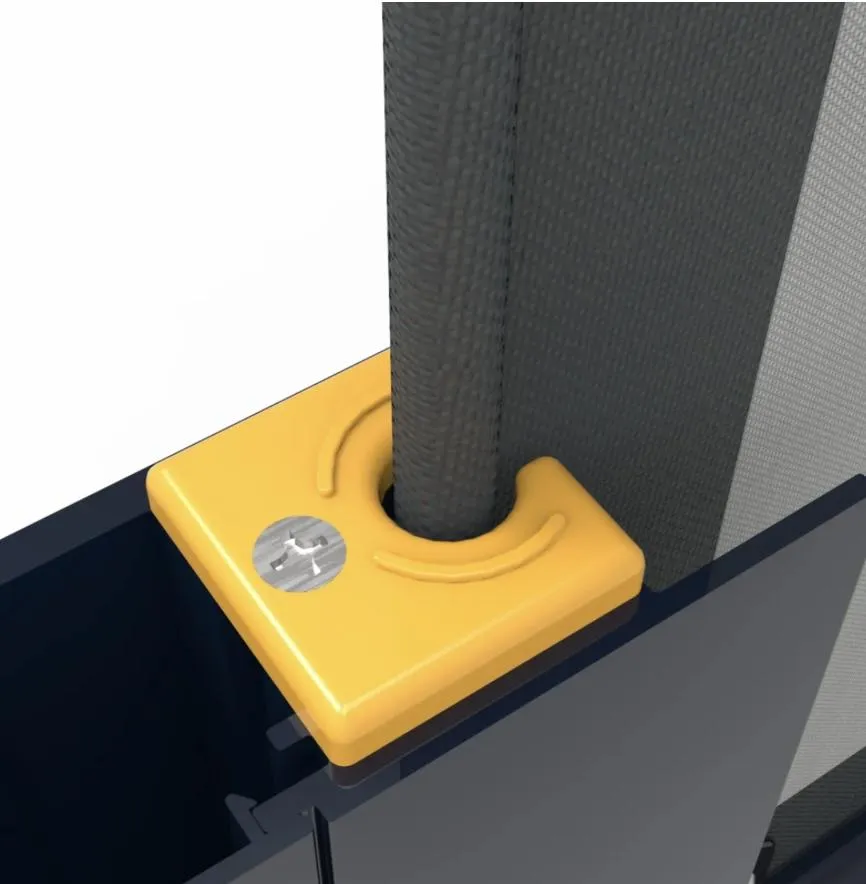
No Zipper. No Cable. Just Simple Deployment
MaxForce pioneered Keder-edge technology in motorized screens, delivering unmatched durability and simplicity. Borrowed from sailboat rigging, this system eliminates zippers, cables, and exposed hardware—ensuring smooth, reliable operation every time.
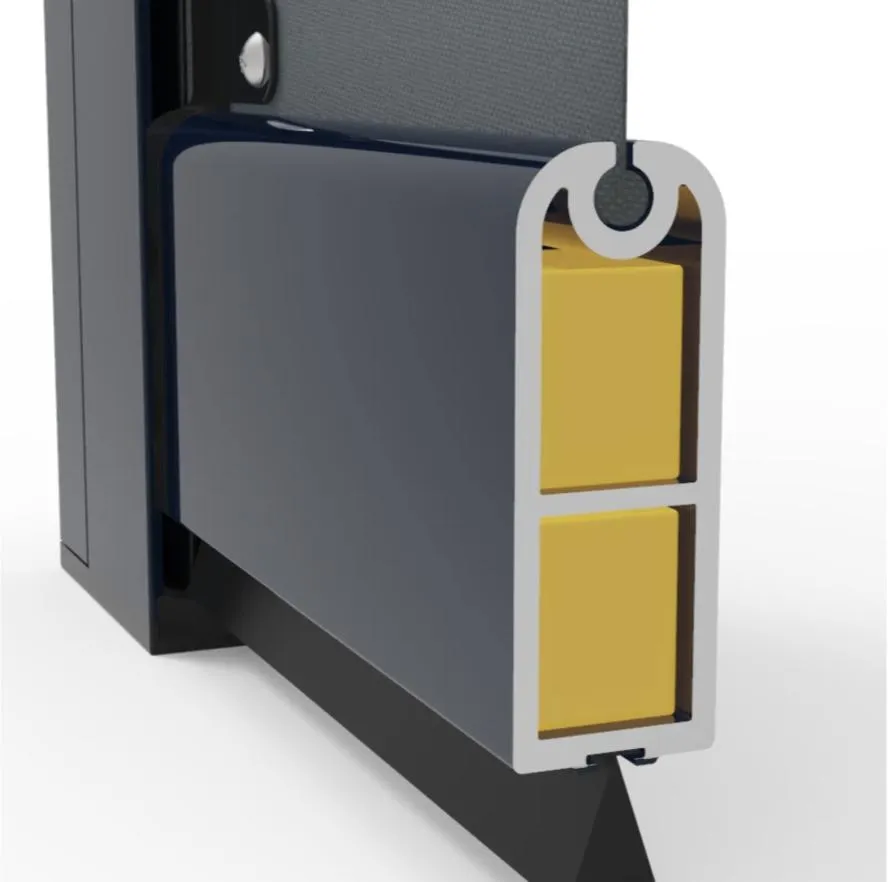
Heavy Duty
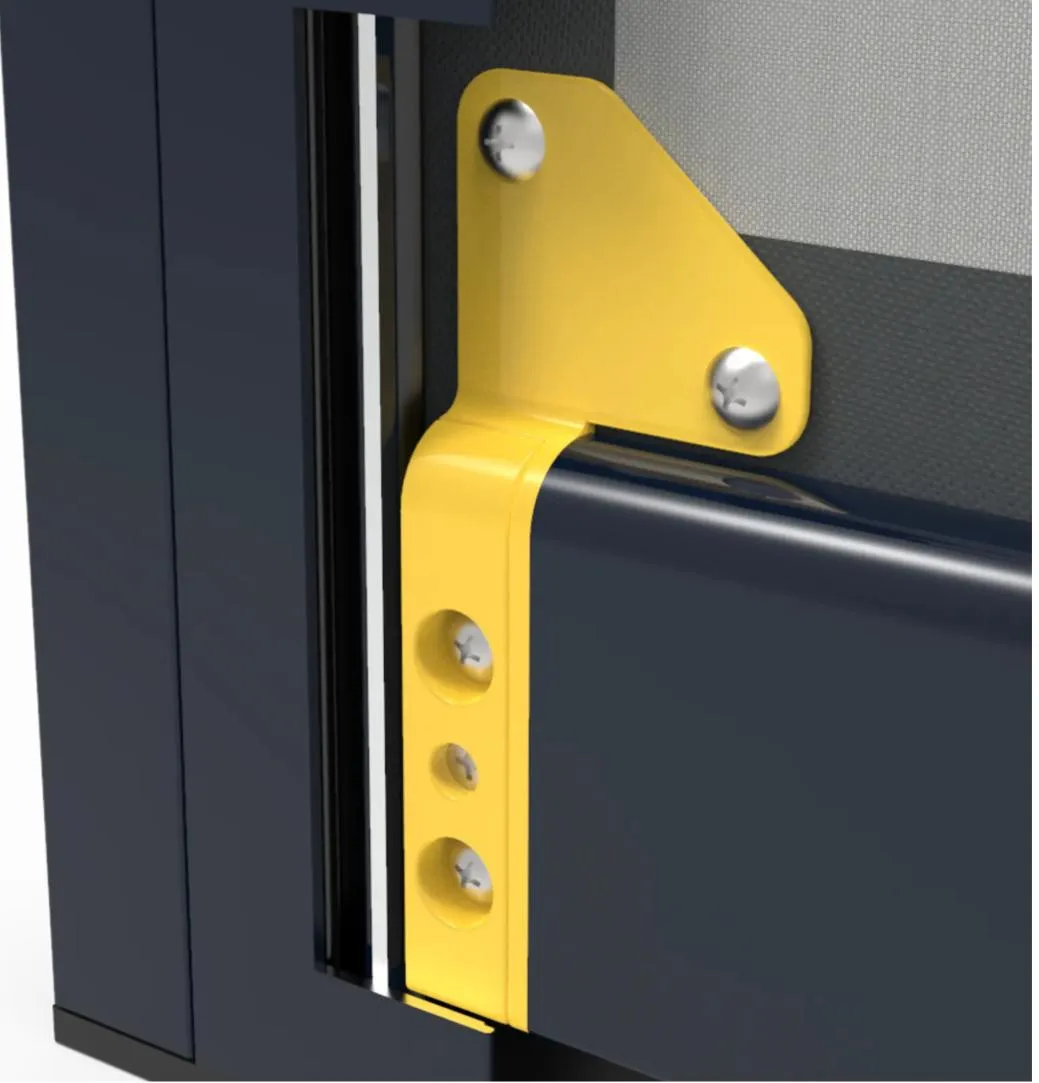
The MaxForce weight bar is engineered for strength—and built to hold its ground. Pound for pound, it’s the heaviest and most robust weight bar in the industry. This ensures proper screen tension, flawless deployment, and maximum stability in high wind zones. —limited flex, no failure.
Reinforced Corners
MaxForce’s heavy-duty weight bar isn’t just strong. It’s smart. Reinforced corners and integrated tie-ins create a unified structure that acts like a solid wall of protection when deployed. Made from high-strength nylon, this bar absorbs impacts while maintaining structural integrity.
Motorized Hurricane Screen
Why Maxforce
MAXFORCE PROVEN PROTECT
Engineered For Excellence
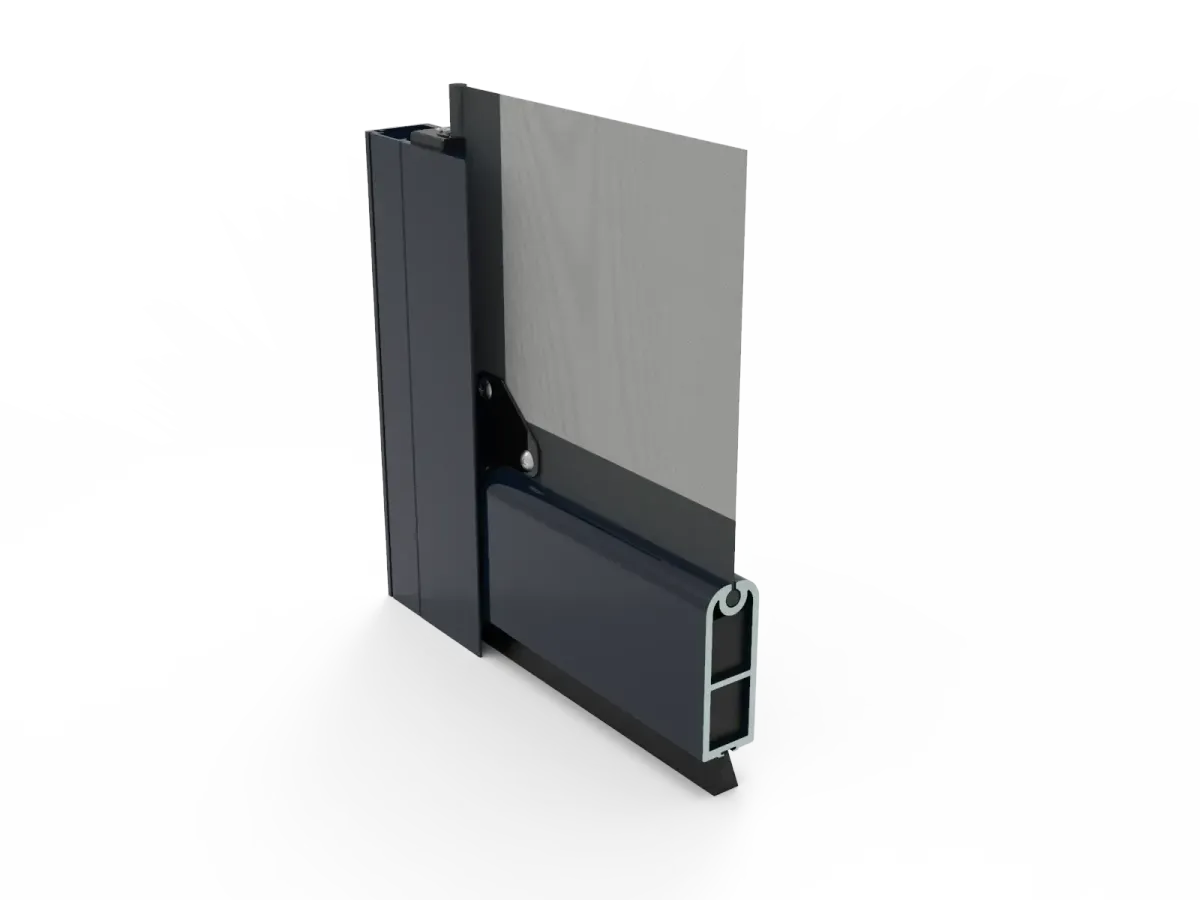
For nearly two decades, MaxForce has manufactured hurricane screens to meet the most demanding building code, the High Velocity Hurricane Zone of Miami-Dade. The MaxForce track is our newest version of the fixed track we have used with great success for high wind applications all over the globe.
The benefits of a fixed track are unmatched strength - this is important when designing a screen system for hurricanes. When you want the strongest system available, and a proven veteran of many hurricanes, the MaxForce Hurricane Track is your best choice.
MAXFORCE THE #1 MOTORIZED
HURRICANE SCREEN
Contact A+ Certified MaxForce Screen
Dealer Today...
MAXFORCE HURRICANE SCREENS
Engineering Features
No blowouts. No rewraps.
No frustration.
MaxForce is the only retractable screen system on the market designed to stay locked in the track—even in high winds. Smart motor senses resistance and adjusts seamlessly, allowing self-correction when the screen encounters an obstacle: Fewer snags, fewer jams, and fewer costly service calls.
No Zipper. No Cable.
Just Simple Deployment
MaxForce pioneered Keder-edge technology in motorized screens, delivering unmatched durability and simplicity. Borrowed from sailboat rigging, this system eliminates zippers, cables, and exposed hardware—ensuring smooth, reliable operation every time.
Heavy Duty
The MaxForce weight bar is engineered for strength—and built to hold its ground. Pound for pound, it’s the heaviest and most robust weight bar in the industry. This ensures proper screen tension, flawless deployment, and maximum stability in high wind zones. —limited flex, no failure.
Reinforced Corners
MaxForce’s heavy-duty weight bar isn’t just strong. It’s smart. Reinforced corners and integrated tie-ins create a unified structure that acts like a solid wall of protection when deployed. Made from high-strength nylon, this bar absorbs impacts while maintaining structural integrity.

HEADACHE-FREE
Exclusive self-tensioning system eliminates 99.9% of screen issues. No track adjustments, broken zippers, or dislodged screens.

LIFETIME WARRANTY
Exterior shade screens reduce cooling bills and MaxForce hurricane screens reduce insurance premiums in hurricane zones.

HURRICANE STRONG
Our MaxForce tracks and advanced hybrid ballistic fabrics withstand 150+ mph winds. Approved by Florida Building Commission for hurricane zones. Lab and real-world tested.

BUILT TO LAST
We use marine-grade materials such as powder-coated aluminum, UV-protected nylons, stainless steel fasteners, and premium fabrics. Resists corrosion, rust, and screen failure.

COST-SAVING
Exterior shade screens reduce cooling bills and MaxForce hurricane screens reduce insurance premiums in hurricane zones.

SMART CONTROLS
Control MaxForce screens via remote and
phone or integrate with popular home automation systems for advanced
capabilities.

SECURE TRACK
MaxForce Fix Hurricane Track holds firm under extreme loads

MAX CORROSION PROTECTION
Powder Coated Aluminum Protects your investment from exposer and corrosion.

HEAVY-DUTY DESIGN
Our screens are designed to withstand the extreme. High wind, Rain, or Shine, Dust Dirt, Dander, it doesn't matter. MaxForce Cover it all.

CUSTOM-MADE SCREENS
Tailor-made screens with vast color, fabric, and system options. Custom paint color and fabric matching are available.
MAXFORCE THE #1 MOTORIZED HURRICANE SCREEN
Contact A+ Certified MaxForce Screen Dealer Today...
HEADACHE-FREE
Exclusive self-tensioning system eliminates 99.9% of screen issues.
No track adjustments, broken zippers,
or dislodged screens.
LIFETIME WARRANTY
Exterior shade screens reduce cooling
bills and MaxForce hurricane screens
reduce insurance premiums in
hurricane zones.
HURRICANE STRONG
Our MaxForce tracks and advanced hybrid ballistic fabrics withstand
150+ mph winds. Approved by Florida Building Commission for hurricane
zones. Lab and real-world tested.
BUILT TO LAST
We use marine-grade materials such
as powder-coated aluminum, UV-protected nylons, stainless steel
fasteners, and premium fabrics. Resists corrosion, rust, and screen failure.
COST-SAVING
Exterior shade screens reduce cooling
bills and MaxForce hurricane screens
reduce insurance premiums in
hurricane zones.
SMART CONTROLS
Control MaxForce screens via remote and
phone or integrate with popular home automation systems for advanced
capabilities.
SECURE TRACK
MaxForce Fix Hurricane Track holds firm under extreme loads
MAX CORROSION PROTECTION
Powder Coated Aluminum Protects your investment from exposer and corrosion.
HEAVY-DUTY DESIGN
Our screens are designed to withstand
the extreme. High wind, Rain, or Shine,
Dust Dirt, Dander, it doesn't matter. MaxForce Cover it all.
CUSTOM-MADE SCREENS
Tailor-made screens with vast color, fabric, and system options. Custom
paint color and fabric matching are available.
MAXFORCE THE #1 MOTORIZED
HURRICANE SCREEN
Contact A+ Certified MaxForce Screen
Dealer Today...
MAXFORCE
Ready For Life's Storms
MAXFORCE HURRICANE SCREEN SYSTEM
A Certified, Tested System...
The MaxForce Hurricane Screen System meets or exceeds Miami-Dade and Florida Building Code requirements—the toughest hurricane codes on earth—for roll-down hurricane screens. Rated for the 185 MPH wind zone, and with real-world and certified testing. With spans of up to 25 feet, they exceed performance criteria for all local and International Building Codes.
MAXFORCE THE #1 MOTORIZED HURRICANE SCREEN
Contact A+ Certified MaxForce Screen Dealer Today...
MAXFORCE
Ready For Life's Storms
MAXFORCE HURRICANE SCREEN SYSTEM
A Certified, Tested System...
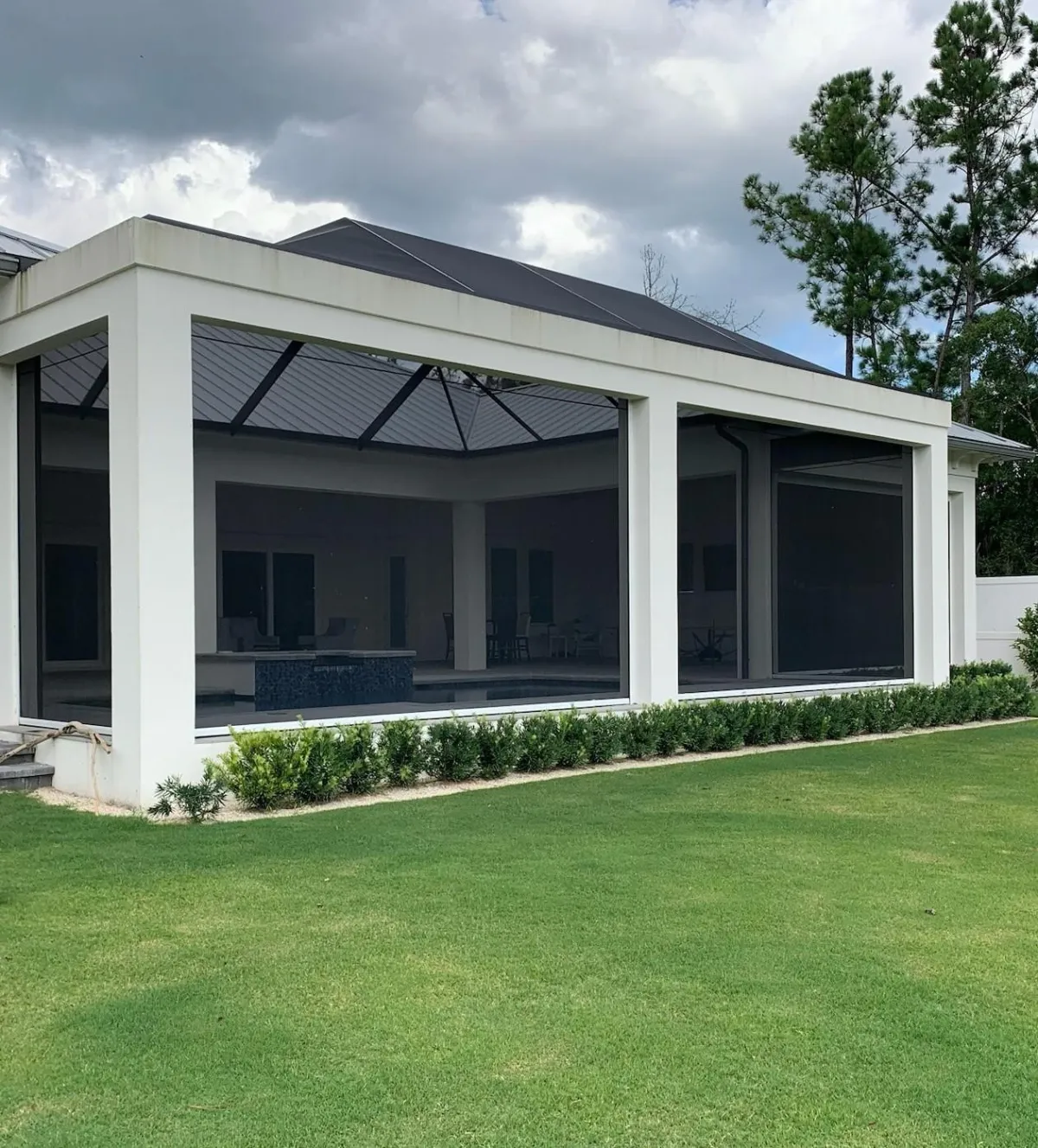
The MaxForce Hurricane Screen System meets or exceeds Miami-Dade and Florida Building Code requirements—the toughest hurricane codes on earth—for roll-down hurricane screens. Rated for the 185 MPH wind zone, and with real-world and certified testing. With spans of up to 25 feet, they exceed performance criteria for all local and International Building Codes.
MAXFORCE THE #1 MOTORIZED
HURRICANE SCREEN
Contact A+ Certified MaxForce Screen
Dealer Today...
THE MAXFORCE DIFFERENCE
Maxforce Hurricane Screen
THE MAXFORCE DIFFERENCE
MaxForce Hurricane Screen
MaxForce Hurricane Screens, powered by our MaxForce system, meet the toughest standards—including HVHZ certification in Miami-Dade and Broward. They last longer, resist more, and do more than any screen on the market—proven protection without compromise.
MaxForce Hurricane Screens —Delivers 365 days of perfect protection, rain or shine, on your patio and lanai. With the push of a button or a tap on the mobile app, your patio is storm-ready— furniture and openings fully protected in seconds.
MaxForce Hurricane Screens fabric blocks up to 95% of the sun’s damaging UV-rays while shielding against wind, rain, insects, dust, and debris. It also helps reduce heat and lower energy costs by limiting solar exposure—comfort and protection in one smart solution.
Like all Maxforce products, our MaxForce Hurricane Screens are highly customizable and built to order—made to fit your exact openings. No guesswork, no compromises—just precision-fit protection tailored to your space.
Pair our retractable MaxForce Hurricane Screens with other Maxforce screens for customized and independent solutions. Each screen operates independently, giving you the protection you want when you need it.
MaxForce Hurricane Screens offer built-in privacy without blocking your view. Like a two-way mirror, you can see out—but neighbors and passersby can not see in. It provides the perfect blend of openness and seclusion, day or night.
MAXFORCE THE #1 MOTORIZED HURRICANE SCREEN
Contact A+ Certified MaxForce Screen Dealer Today...
INTEGRITY MATTERS
How MaxForce Is Made Matters
MaxForce Hurricane Screens, powered by our MaxForce system, meet the toughest standards—including HVHZ certification in Miami-Dade and Broward. They last longer, resist more, and do more than any screen on the market—proven protection without compromise.
.
MaxForce Hurricane Screens —Delivers 365 days of perfect protection, rain or shine, on your patio and lanai. With the push of a button or a tap on the mobile app, your patio is storm-ready— furniture and openings fully protected in seconds.
MaxForce Hurricane Screens fabric blocks up to 95% of the sun’s damaging UV-rays while shielding against wind, rain, insects, dust, and debris. It also helps reduce heat and lower energy costs by limiting solar exposure—comfort and protection in one smart solution.
.
Like all Maxforce products, our MaxForce Hurricane Screens are highly customizable and built to order—made to fit your exact openings. No guesswork, no compromises—just precision-fit protection tailored to your space.
.
Pair our retractable MaxForce Hurricane Screens with other Maxforce screens for customized and independent solutions. Each screen operates independently, giving you the protection you want when you need it.
.
MaxForce Hurricane Screens offer built-in privacy without blocking your view. Like a two-way mirror, you can see out—but neighbors and passersby can not see in. It provides the perfect blend of openness and seclusion, day or night.
.
MAXFORCE THE #1 MOTORIZED
HURRICANE SCREEN
Contact A+ Certified MaxForce Screen
Dealer Today...
INTEGRITY MATTERS
How MaxForce Is
Made Matters
AMERICAN INGENUITY
Made in the USA.
Proudly Made in the USA—every MaxForce screen is built with American strength, precision, and pride. From the smallest components to the final assembly, our materials are sourced and manufactured right here in the United States. No outsourcing. No compromises. Just hardworking Americans protecting American homes with the toughest screen system on the market.
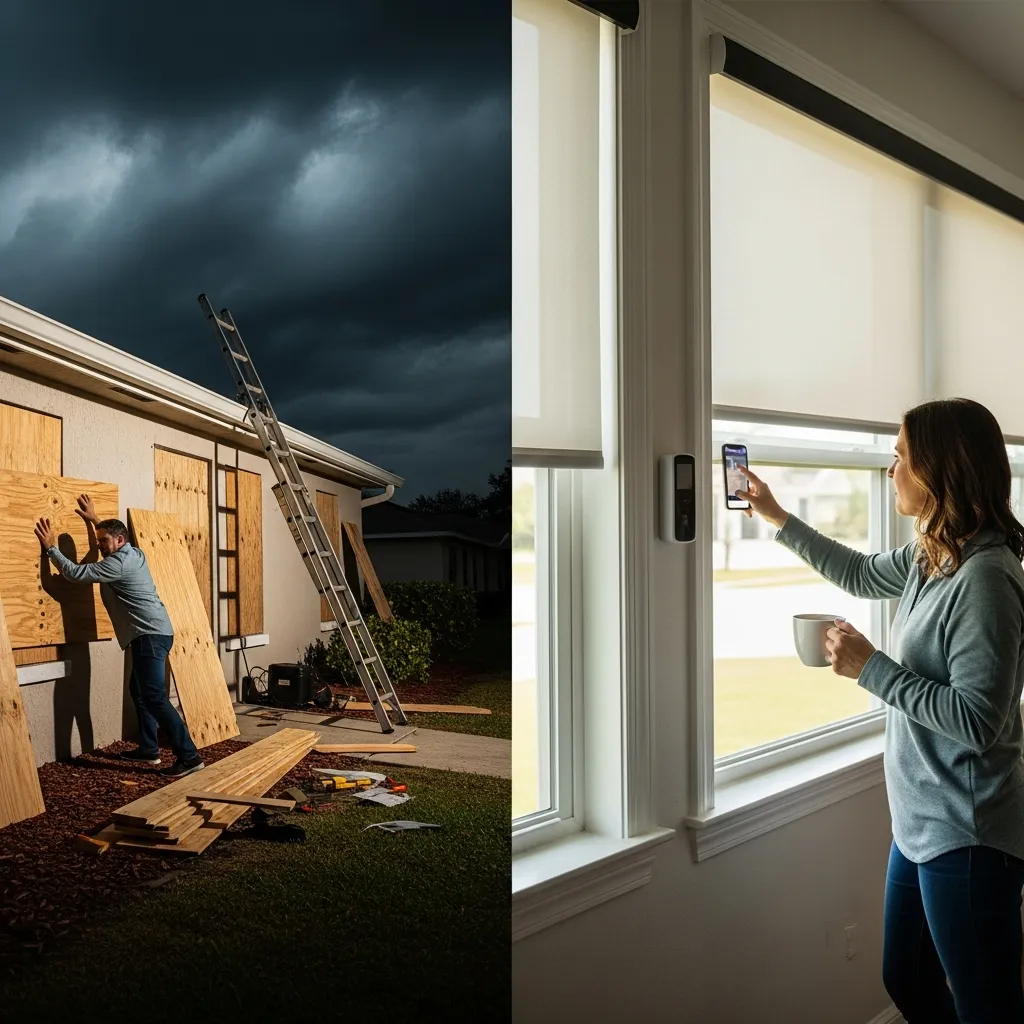
One Decision, Every Season After: Permanent Protection vs. Annual Scrambling
One Decision, Every Season After: The Homeowner’s Choice Between Permanent Protection and Annual Scrambling
Who You Were Twelve Weeks Ago
Twelve weeks ago, you may have been the homeowner who thought about hurricane
season the way most Floridians do — with a vague intention to get ready, sometime
before June, probably the same way you got ready last year. Batteries. Water. Plywood if
things looked serious.
You are not that homeowner anymore.
Over the course of this series, you have learned things that most hurricane preparation
advice never teaches. You understand that a building envelope breach transforms a
survivable storm into catastrophic interior damage. You know that “hurricane rated” has
no legal definition. You understand your hurricane deductible and the flood exclusion
on your windstorm policy. You know that the March-to-May window is when decisions
must be made, and that contractors available in March are gone by June. You have seen
the engineering, the testing, the ninety-day plan, and the outdoor living vulnerability.
All of that knowledge now lives in you. The question that remains is what you do with it.
Two Futures, One Morning
Homeowner A wakes up on a Thursday in September.
The National Hurricane Center issued a watch overnight. A major hurricane is tracking
toward the Gulf coast. Landfall projected in 48 to 72 hours. The cone includes her
county.
She checks the forecast three times before coffee. Calls her husband at work. Starts
making a list. The plywood is in the garage — she thinks. She needs water, gas, cash. The
kids need to be picked up early. Does the insurance cover the lanai? She cannot
remember the deductible. She needs to board the front windows but the ladder is behind
the boat and she has not tested the generator since last year.
By noon, the hardware store is out of plywood. The gas station line is forty minutes. Her
neighbor is already up on a ladder and she feels behind. The list keeps growing and the
hours keep shrinking and the feeling she knows best from every previous season is
settling in: she is scrambling. Again. The same anxiety, the same incomplete
preparation, the same quiet knowledge that some things on the list will not get done
before the storm arrives.
Homeowner B wakes up on the same Thursday.
She sees the same watch. Reads the same forecast. Picks up her phone, opens an app,
and presses a button. The motorized screens descend from their cassette housings. Sixty
seconds per opening. The Keder tracks lock each panel into place. The lanai, the pool
cage, every window, every door — sealed.
She makes coffee. She already has water and supplies from May. The insurance binder is
in the cloud folder she assembled during the ninety-day plan. The hurricane deductible
is calculated. The flood policy is current. The generator was tested last week. The family
communication plan is on the refrigerator.
She drives the kids to school. She goes to work. When people ask if she is ready, she says
yes, and means it. Not because the hurricane will not come, but because every decision
that could be made in advance has been made. The scramble is not hers anymore.
Both homeowners live in the same neighborhood with similar homes and similar
families. The only difference is a decision one of them made in April.
The Lifetime Math Most Homeowners Never Calculate
The cost of reactive hurricane preparation is not what you spend in any single year. It is
what you spend across every year of homeownership, compounded by the risks you
carry and the premiums you pay.
The annual cost of scrambling:
Temporary protection materials: $200 to $800 per season. Fuel, supplies, and surge-
priced purchases: $300 to $600. Time: 8 to 20 hours per storm threat. Stress and
missed work: unquantifiable but real. Over twenty years, direct costs reach $10,000 to
$28,000 — assuming nothing goes wrong and no storm actually hits.
The cost when something does go wrong:
A single building envelope breach during a major hurricane triggers interior damage
averaging $20,000 to $80,000 or more. The hurricane deductible absorbs the first 2 to
10 percent of your dwelling coverage — $8,000 to $40,000 out of pocket on a $400,000
policy. The wind-versus-water dispute can reduce or eliminate coverage for water
damage. Outdoor structure replacement adds $30,000 to $80,000. Total uninsured or
underinsured loss from a single major storm can reach $50,000 to $120,000.
The cost of permanent protection:
A whole-home motorized hurricane screen system typically costs $15,000 to $50,000 —
a one-time investment. Wind mitigation credits reduce windstorm premiums by 10 to 45
percent in Florida, returning $750 or more per year on a typical policy. Over twenty
years: $15,000 in insurance savings alone. Add eliminated annual preparation costs and
the reduction in catastrophic loss exposure, and the investment math works in every
direction.
Over twenty years, the total cost of reactive preparation plus one major storm event can
exceed $100,000. The total cost of permanent protection, net of insurance savings, often
falls below $30,000.
Is Permanent Hurricane Protection Worth the Cost?
For most Florida homeowners, permanent hurricane protection delivers a positive
return within 5 to 10 years through insurance savings alone. A whole-home system costs
$15,000 to $50,000 one time. Wind mitigation credits return $10,000 to $40,000 over
twenty years. Eliminated annual preparation saves $10,000 to $28,000 more. And
avoided catastrophic loss exposure ($50,000–$120,000+ from a single storm)
represents the largest financial return. The reactive alternative provides no debris
defense, no premium reduction, and no outdoor living protection.
How Much Does Annual Hurricane Preparation Cost Over Time?
Annual reactive preparation costs $500 to $1,400 per year in materials, supplies, and
fuel, plus 8 to 20 hours per storm threat. Over 20 years: $10,000 to $28,000 in direct
costs alone. A single major hurricane adds $20,000 to $80,000+ in interior damage,
$30,000 to $80,000+ in outdoor replacement, and $8,000 to $40,000 in deductible
exposure. Lifetime reactive cost including one major storm: $60,000 to over $100,000.
The Decision You Have Already Been Making
If you have followed this series from the beginning, you have already been making a
decision. Not a single dramatic decision, but a series of small ones. You chose to learn
about building envelope science when you could have skipped to the supply list. You
chose to understand testing standards when you could have trusted the marketing
language. Each of those choices moved you closer to a specific identity: the homeowner
who prepares with knowledge, not panic.
Psychologist Robert Cialdini documented what happens when people take small,
consistent actions aligned with an identity: they become increasingly likely to take larger
actions consistent with that same identity. You are not being persuaded toward a
decision. You have been building toward one — article by article, question by question.
The question is not whether the evidence supports permanent hurricane protection. You
have spent twelve articles absorbing that evidence. The question is whether you are
ready to act on what you know. Are you the homeowner who knows what to do and does
it? Or the one who knows what to do and means to get around to it? Both have the same
information. Only one has the same experience when the next watch is issued.
One Step, No Obligation, Complete Clarity
If you are ready to explore permanent protection for your home, request a free home
protection assessment. It takes approximately thirty minutes. A specialist walks your
property, identifies every opening, evaluates your current protection, and provides a
complete proposal with certified product specifications, installation timeline, and
pricing.
There is no obligation. The assessment produces a complete vulnerability inventory of
your home — the same inventory that Blog 9’s ninety-day plan identifies as the single
most important document in your hurricane preparation. You will leave knowing exactly
what your home needs, what it costs, and how long it takes to install. That clarity is
yours regardless of what you decide.
We have spent twelve articles giving you everything we know about hurricane
preparation, building science, testing standards, insurance realities, and the engineering
behind the products we believe in. We did this because informed homeowners make
better decisions — and because the decision to protect your home should come from
understanding, not from the pressure of an approaching storm. Whether or not you
choose MaxForce, you deserve to make that choice with complete clarity. The best time
to make it is now, while the calendar is on your side.
What Is the ROI of Hurricane Protection?
ROI comes from three sources: wind mitigation insurance credits (10–45% of
windstorm premiums, $10,000–$40,000 over 20 years), eliminated annual preparation
($10,000–$28,000 over 20 years), and catastrophic loss avoidance (intact envelope
prevents $20,000–$80,000+ interior damage and protects $30,000–$80,000+
outdoor investments). Combined returns typically exceed a whole-home system cost
($15,000–$50,000) within 5 to 10 years through insurance savings and eliminated
preparation alone.
What Happens Next
The next hurricane season will begin on June 1. The next tropical disturbance will form.
The next watch will be issued. The next warning will follow. These are not predictions.
They are the rhythm of life on a peninsula that extends into warm water between two
oceans.
When that watch is issued, you will be one of two homeowners. The one who scrambles,
or the one who presses a button. The one who hopes the plywood holds, or the one who
knows the Keder tracks are locked. The one who wonders about the insurance, or the
one who has the binder in the cloud folder.
The next hurricane warning will come. The only question is how you will feel when it
does.

Company
MaxForce Hurricane Screens
Design Ideals
Resources


© 2025 Maxforce - Powered by Fenetex and Friends of Oatis
AMERICAN INGENUITY
Made in the USA
Proudly Made in the USA—every MaxForce screen is built with American strength, precision, and pride. From the smallest components to the final assembly, our materials are sourced and manufactured right here in the United States. No outsourcing. No compromises. Just hardworking Americans protecting American homes with the toughest screen system on the market.
One Decision, Every Season After: Permanent Protection vs. Annual Scrambling
One Decision, Every Season After: The Homeowner’s Choice Between Permanent Protection and Annual Scrambling
Who You Were Twelve Weeks Ago
Twelve weeks ago, you may have been the homeowner who thought about hurricane
season the way most Floridians do — with a vague intention to get ready, sometime
before June, probably the same way you got ready last year. Batteries. Water. Plywood if
things looked serious.
You are not that homeowner anymore.
Over the course of this series, you have learned things that most hurricane preparation
advice never teaches. You understand that a building envelope breach transforms a
survivable storm into catastrophic interior damage. You know that “hurricane rated” has
no legal definition. You understand your hurricane deductible and the flood exclusion
on your windstorm policy. You know that the March-to-May window is when decisions
must be made, and that contractors available in March are gone by June. You have seen
the engineering, the testing, the ninety-day plan, and the outdoor living vulnerability.
All of that knowledge now lives in you. The question that remains is what you do with it.
Two Futures, One Morning
Homeowner A wakes up on a Thursday in September.
The National Hurricane Center issued a watch overnight. A major hurricane is tracking
toward the Gulf coast. Landfall projected in 48 to 72 hours. The cone includes her
county.
She checks the forecast three times before coffee. Calls her husband at work. Starts
making a list. The plywood is in the garage — she thinks. She needs water, gas, cash. The
kids need to be picked up early. Does the insurance cover the lanai? She cannot
remember the deductible. She needs to board the front windows but the ladder is behind
the boat and she has not tested the generator since last year.
By noon, the hardware store is out of plywood. The gas station line is forty minutes. Her
neighbor is already up on a ladder and she feels behind. The list keeps growing and the
hours keep shrinking and the feeling she knows best from every previous season is
settling in: she is scrambling. Again. The same anxiety, the same incomplete
preparation, the same quiet knowledge that some things on the list will not get done
before the storm arrives.
Homeowner B wakes up on the same Thursday.
She sees the same watch. Reads the same forecast. Picks up her phone, opens an app,
and presses a button. The motorized screens descend from their cassette housings. Sixty
seconds per opening. The Keder tracks lock each panel into place. The lanai, the pool
cage, every window, every door — sealed.
She makes coffee. She already has water and supplies from May. The insurance binder is
in the cloud folder she assembled during the ninety-day plan. The hurricane deductible
is calculated. The flood policy is current. The generator was tested last week. The family
communication plan is on the refrigerator.
She drives the kids to school. She goes to work. When people ask if she is ready, she says
yes, and means it. Not because the hurricane will not come, but because every decision
that could be made in advance has been made. The scramble is not hers anymore.
Both homeowners live in the same neighborhood with similar homes and similar
families. The only difference is a decision one of them made in April.
The Lifetime Math Most Homeowners Never Calculate
The cost of reactive hurricane preparation is not what you spend in any single year. It is
what you spend across every year of homeownership, compounded by the risks you
carry and the premiums you pay.
The annual cost of scrambling:
Temporary protection materials: $200 to $800 per season. Fuel, supplies, and surge-
priced purchases: $300 to $600. Time: 8 to 20 hours per storm threat. Stress and
missed work: unquantifiable but real. Over twenty years, direct costs reach $10,000 to
$28,000 — assuming nothing goes wrong and no storm actually hits.
The cost when something does go wrong:
A single building envelope breach during a major hurricane triggers interior damage
averaging $20,000 to $80,000 or more. The hurricane deductible absorbs the first 2 to
10 percent of your dwelling coverage — $8,000 to $40,000 out of pocket on a $400,000
policy. The wind-versus-water dispute can reduce or eliminate coverage for water
damage. Outdoor structure replacement adds $30,000 to $80,000. Total uninsured or
underinsured loss from a single major storm can reach $50,000 to $120,000.
The cost of permanent protection:
A whole-home motorized hurricane screen system typically costs $15,000 to $50,000 —
a one-time investment. Wind mitigation credits reduce windstorm premiums by 10 to 45
percent in Florida, returning $750 or more per year on a typical policy. Over twenty
years: $15,000 in insurance savings alone. Add eliminated annual preparation costs and
the reduction in catastrophic loss exposure, and the investment math works in every
direction.
Over twenty years, the total cost of reactive preparation plus one major storm event can
exceed $100,000. The total cost of permanent protection, net of insurance savings, often
falls below $30,000.
Is Permanent Hurricane Protection Worth the Cost?
For most Florida homeowners, permanent hurricane protection delivers a positive
return within 5 to 10 years through insurance savings alone. A whole-home system costs
$15,000 to $50,000 one time. Wind mitigation credits return $10,000 to $40,000 over
twenty years. Eliminated annual preparation saves $10,000 to $28,000 more. And
avoided catastrophic loss exposure ($50,000–$120,000+ from a single storm)
represents the largest financial return. The reactive alternative provides no debris
defense, no premium reduction, and no outdoor living protection.
How Much Does Annual Hurricane Preparation Cost Over Time?
Annual reactive preparation costs $500 to $1,400 per year in materials, supplies, and
fuel, plus 8 to 20 hours per storm threat. Over 20 years: $10,000 to $28,000 in direct
costs alone. A single major hurricane adds $20,000 to $80,000+ in interior damage,
$30,000 to $80,000+ in outdoor replacement, and $8,000 to $40,000 in deductible
exposure. Lifetime reactive cost including one major storm: $60,000 to over $100,000.
The Decision You Have Already Been Making
If you have followed this series from the beginning, you have already been making a
decision. Not a single dramatic decision, but a series of small ones. You chose to learn
about building envelope science when you could have skipped to the supply list. You
chose to understand testing standards when you could have trusted the marketing
language. Each of those choices moved you closer to a specific identity: the homeowner
who prepares with knowledge, not panic.
Psychologist Robert Cialdini documented what happens when people take small,
consistent actions aligned with an identity: they become increasingly likely to take larger
actions consistent with that same identity. You are not being persuaded toward a
decision. You have been building toward one — article by article, question by question.
The question is not whether the evidence supports permanent hurricane protection. You
have spent twelve articles absorbing that evidence. The question is whether you are
ready to act on what you know. Are you the homeowner who knows what to do and does
it? Or the one who knows what to do and means to get around to it? Both have the same
information. Only one has the same experience when the next watch is issued.
One Step, No Obligation, Complete Clarity
If you are ready to explore permanent protection for your home, request a free home
protection assessment. It takes approximately thirty minutes. A specialist walks your
property, identifies every opening, evaluates your current protection, and provides a
complete proposal with certified product specifications, installation timeline, and
pricing.
There is no obligation. The assessment produces a complete vulnerability inventory of
your home — the same inventory that Blog 9’s ninety-day plan identifies as the single
most important document in your hurricane preparation. You will leave knowing exactly
what your home needs, what it costs, and how long it takes to install. That clarity is
yours regardless of what you decide.
We have spent twelve articles giving you everything we know about hurricane
preparation, building science, testing standards, insurance realities, and the engineering
behind the products we believe in. We did this because informed homeowners make
better decisions — and because the decision to protect your home should come from
understanding, not from the pressure of an approaching storm. Whether or not you
choose MaxForce, you deserve to make that choice with complete clarity. The best time
to make it is now, while the calendar is on your side.
What Is the ROI of Hurricane Protection?
ROI comes from three sources: wind mitigation insurance credits (10–45% of
windstorm premiums, $10,000–$40,000 over 20 years), eliminated annual preparation
($10,000–$28,000 over 20 years), and catastrophic loss avoidance (intact envelope
prevents $20,000–$80,000+ interior damage and protects $30,000–$80,000+
outdoor investments). Combined returns typically exceed a whole-home system cost
($15,000–$50,000) within 5 to 10 years through insurance savings and eliminated
preparation alone.
What Happens Next
The next hurricane season will begin on June 1. The next tropical disturbance will form.
The next watch will be issued. The next warning will follow. These are not predictions.
They are the rhythm of life on a peninsula that extends into warm water between two
oceans.
When that watch is issued, you will be one of two homeowners. The one who scrambles,
or the one who presses a button. The one who hopes the plywood holds, or the one who
knows the Keder tracks are locked. The one who wonders about the insurance, or the
one who has the binder in the cloud folder.
The next hurricane warning will come. The only question is how you will feel when it
does.