
Why Choose MaxForce™ Hurricane Screens Over Shutters or Hurricane Protections?
The Short Answer
MaxForce™ gives you approved hurricane protection you can use every day. Shutters are stored until a storm and close off your view; MaxForce™ is motorized, deploys in under a minute at the push of a button, and lets you see out while it's down. Between storms, the same screen blocks sun and keeps insects out.
- Approved for the HVHZ
- Deploys in under a minute
- See out while it's down
- Built for 365-day use
FL8637-R15
Florida Product Approval, HVHZ designation
185 MPH wind zone
Rated for the 185 MPH wind zone (HVHZ)
Quiet Spring Technology™
Self-adjusting spring-tensioned track
Large missile impact
Tested to Missile Level D, Wind Zone 4
MAXFORCE™ PROVEN PROTECTION
One screen. Every Season. Every Storm
Proven means tested. MaxForce™ Hurricane Screens are engineered for use in High Velocity Hurricane Zones and approved for Miami-Dade County under Florida Product Approval FL8637-R15, rated for the 185 MPH wind zone. But. A hurricane screen that only comes down a few days a year is hard to justify.
MaxForce™ earns its place 365 days a year, blocking the sun, keeping bugs off your lanai, and giving you daytime patio privacy, all at the push of a button.
The self-adjusting, spring-tensioned track keeps it taut, quiet, and smooth every time it runs, minimizing costly service calls.
That is the MaxForce™ difference. One screen. Every season. Every storm. That's MaxForce™ 365.
Hurricane Protection
Ballistically Engineered
Remote Activation
Blocks up to 91% of UV rays
Keep Out Insects

BEHIND THE PERFORMANCE
What Makes MaxForce™ Hurricane Screens Different?
Every MaxForce™ hurricane screen is built around three parts that work together: calibrated spring tension, a self-adjusting track, and a keder edge that holds the fabric in that track. The result is protection that's comfortable to use every day and ready for the day it matters most.
Calibrated Spring Tension
Calibrated spring tension delivers continuous, fine-tuned adjustment as the screen deploys and retracts — quieter and smoother than the fixed-track system it replaces.
Self-Adjusting Tracks
The track adjusts on its own as temperatures change and as wind pushes on the screen, so you never have to adjust it.
Lock-Tight Keder
An engineered fabric-to-track sealing system maintains hurricane-grade edge retention while keeping the visible surface smooth and architectural in every condition.
MAXFORCE™ HURRICANE SCREENS
Tested Where Storms Are Tested
MAXFORCE™ HURRICANE SCREEN SYSTEMS
Tested Beyond the Spec Sheet
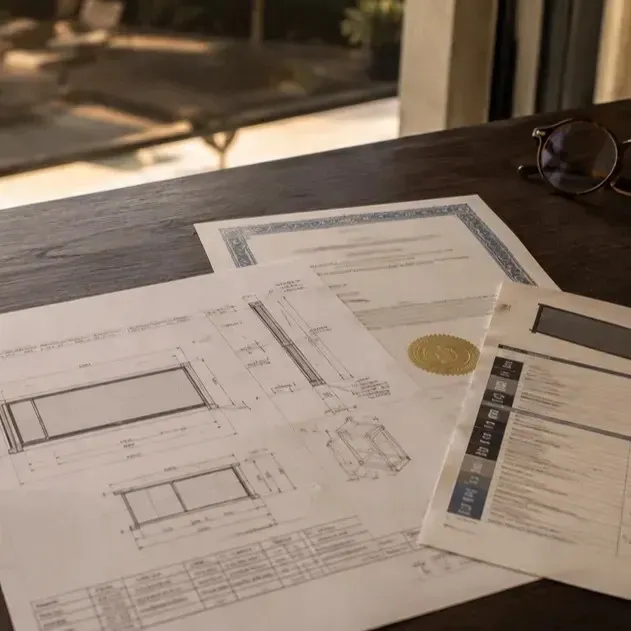
Anyone can print "hurricane rated" on a box. Approval is harder. A product first has to pass lab tests for flying debris and wind pressure, and then the state has to accept those results as meeting the building code. MaxForce™ passed the Miami-Dade TAS and ASTM impact and pressure tests and is approved for use in Miami-Dade County and the High Velocity Hurricane Zone under Florida Product Approval FL8637-R15.
Here are the tests MaxForce™ passed and the approval they earned:

HURRICANE STRONG
FL8637-R15 is listed in Florida's Building Code Information System (BCIS), so your building official can look up the approval for themselves.

SECURE TRACK
The spring-tensioned track holds the screen's edge in place when wind pushes on the fabric.

HEAVY-DUTY DESIGN
Built for High Velocity Hurricane Zones and rated for the 185 MPH wind zone. On ordinary days it keeps out sun, rain, bugs and dust.
MAXFORCE™ HURRICANE FABRIC
Ballistically Engineered to Take a Hit
THE FABRIC
Strength Woven Into Every Screen
A hurricane screen is only as strong as its fabric. MaxForce™ uses OmegaTex hurricane fabric, made with Kevlar® fiber. The system was impact-tested to Miami-Dade TAS 201 and ASTM E1886 and E1996 as part of MaxForce Hurricane Screens earning Florida Product Approval FL8637-R15. Around the fabric, a powder-coated aluminum frame, high-strength nylon corners, and a weighted bottom bar keep every screen square and in its track.

BUILT TO LAST
Powder-coated aluminum frames, high-strength nylon corners and OmegaTex hurricane fabric, chosen to stand up to Florida sun, rain and humidity.

MAX CORROSION PROTECTION
Powder-coated aluminum protects your investment from weather and corrosion.

COMPONENT WARRANTY
Lifetime coverage on the aluminum and proprietary components. 10 years on the hurricane fabric, 5 years on the motor, and 5 or 3 years on the paint. Original owner.
MAXFORCE™ MOTORIZED CONTROL
Remote Activation in Under a Minute
ONE BUTTON
Storm Ready Without the Ladder
Shutters mean panels, hardware and a ladder, usually in the heat and usually the day before a storm. MaxForce™ screens are motorized: press a button and each screen lowers in under a minute. Motors are available from Fenetex, Somfy, Gaposa and Simu, and every one has obstacle detection that stops the screen if something is in its path. Add a Bond Bridge Pro hub and you can run your screens from your phone, even when you're away.

SMART CONTROLS
Run MaxForce™ screens by remote, by phone app with a Bond Bridge Pro hub, by voice with Alexa or Google Assistant, or through Control4, Crestron or Savant.

HEADACHE-FREE
The self-adjusting, spring-tensioned track keeps the screen taut on its own. No track adjustments, no zippers to break, no cables to fray.
MAXFORCE™ MOTORIZED HURRICANE SCREEN
Contact an Authorized MaxForce™ Dealer Today
MAXFORCE™ 365
Sun and UV Protection Between Storms
EVERY SEASON
Shade You'll Use Every Day
Between storms, the same hurricane fabric does the work of a sun screen. Lower it on a hot afternoon and it blocks 91% of UV, cutting glare and heat on the lanai and slowing fading on furniture and flooring. Because the shade is on the outside, the sun is stopped before it reaches the glass. During the day you can still see out, while it's hard for anyone outside to see in.

COST-SAVING
Exterior shade can cut heat on your patio and help with cooling. Ask your insurance agent whether approved opening protection qualifies for a wind-mitigation discount.

MAXFORCE™ 365
A self-adjusting, spring-tensioned track keeps your screen quiet, taut and storm-ready year-round.
MAXFORCE™ 365
Insect Protection for Your Lanai
EVERY SEASON
Screened In When You Want It
Lower your screens and the fabric keeps mosquitoes and other insects off the lanai. The edges stay in their side tracks from top to bottom, with no zippers to wear out, and the weighted bottom bar rests on the floor to close the opening. Raise them and the view is wide open again, with nothing permanent in the way.

CUSTOM-MADE SCREENS
Every screen is built to your openings. Choose from six fabric colors and four frame colors, or have the frame custom painted to match your home.

CLEAN DESIGN
Slim profiles and clean lines suit any architecture. Raised, the screen rolls up out of sight. Lowered, it's one clean panel of fabric.
MAXFORCE™ MOTORIZED HURRICANE SCREEN
Contact an Authorized MaxForce™ Dealer Today
Questions About Choosing MaxForce™ Hurricane Screens
Are MaxForce™ screens worth it compared to hurricane shutters or impact glass?
It depends on what you need the system to do. Impact glass protects against direct hurricane impact but doesn't retract — it's permanent architecture. Shutters protect well but require manual deployment or storage. MaxForce™ screens deploy in under sixty seconds, retract completely out of sight when not needed, and provide year-round UV and insect protection that the other two systems don't. For homeowners who use their patio or lanai throughout the year, the retractability often justifies the choice.
How are MaxForce™ hurricane screens different from older hurricane screen systems?
Earlier MaxForce systems used a fixed-track design — strong, but without the continuous adjustment the new system provides. Today's MaxForce™ uses a self-adjusting, spring-tensioned track that keeps the screen under steady tension as it opens, closes and takes wind load. The result is quiet, smooth, everyday operation that the fixed-track generation couldn't deliver, with the same approval for use in Miami-Dade County under Florida Product Approval FL8637-R15.
Why are MaxForce™ screens more expensive than other hurricane screen options?
Price reflects what goes into each screen: a self-adjusting, spring-tensioned track, OmegaTex hurricane fabric, a heavy weight bar with reinforced nylon corners, a motor, and a screen custom-built to each opening and installed by an authorized dealer. It also reflects the testing behind Florida Product Approval FL8637-R15. Your dealer can walk you through the quote line by line.
How does the MaxForce warranty compare to other screen warranties?
MaxForce screens carry a limited manufacturer's warranty from Fenetex against manufacturing defects, with coverage that varies by component. Aluminum, proprietary components, and welded seams are covered for the life of the system — for as long as the system or compatible systems remain in production and parts are available. Motors and operators are covered for 5 years. Hurricane fabric carries a 10-year UV-stability warranty. Paint finishes are covered for 5 years when installed more than a mile from the coast, and 3 years within a mile of the coast. The warranty applies to the original owner and is not transferable. When you compare warranties, look at what each part is covered for, for how long, and whether coverage transfers if you sell the home.
Has MaxForce™ been tested in real hurricanes?
MaxForce™ was tested to the lab protocols that Florida uses to simulate a major storm: Miami-Dade TAS 201 (impact), TAS 202 (static pressure) and TAS 203 (cyclic pressure), and ASTM E1886, E1996 and E330. Passing those tests is what earned approval for use in Miami-Dade County and the High Velocity Hurricane Zone under Florida Product Approval FL8637-R15.
Will MaxForce™ screens hold up in a Category 5 hurricane?
No product can promise how it will perform in a particular storm, because every storm and every home is different. Here is what we can say: MaxForce™ hurricane screens are engineered for use in High Velocity Hurricane Zones and approved for Miami-Dade County under Florida Product Approval FL8637-R15, rated for the 185 MPH wind zone. To earn that approval, the system passed the TAS 201 large- and small-missile impact tests and the TAS 202 and TAS 203 pressure tests. A wind zone rating describes the design wind speed the building code uses for an area; it is not a promise about a particular hurricane category. In any major hurricane, follow your local evacuation orders.
Does MaxForce™ 365 work outside of hurricane zones?
Yes. Most owners use MaxForce™ every day for shade, insect and privacy control, and lower it for storms. It's installed on homes across the country, not only in coastal Florida. Building codes outside Florida set their own wind requirements, so your dealer checks what applies where you live.
Can MaxForce™ screens be installed on existing homes, or only new construction?
Both. MaxForce™ screens can be added to existing homes as well as new construction. Your dealer checks that the framing around each opening can carry the track, measures every opening, and the screens are built to those numbers. Most residential installations take one to two days once the screens are made.
MAXFORCE™ NEWS
The homeowner's guide to protecting what a bad storm can take away.
Protecting a patio or lanai from hurricane-force winds isn't a single decision — it's a sequence of them. A hurricane screen has to be tested for wind pressure, flying debris and the pressure difference that builds when a storm surrounds a structure, and then approved for use where you live. The right system depends on your home's exposure, the size and orientation of the opening, local building code requirements, and whether you want passive or motorized protection. MaxForce™ motorized hurricane screens are engineered for use in High Velocity Hurricane Zones and approved for Miami-Dade County under Florida Product Approval FL8637-R15 — among the most demanding hurricane standards in the United States — and deploy in under a minute at the press of a button. Understanding what separates a code-compliant installation from a cosmetic one is the difference between protection and exposure.
MaxForce™ News covers both sides of storm readiness: the code requirements that actually protect your home, the engineering that holds up past the marketing claims, the insurance coverage nobody explains upfront, and the questions to ask before you commit. Written for homeowners, not engineers.
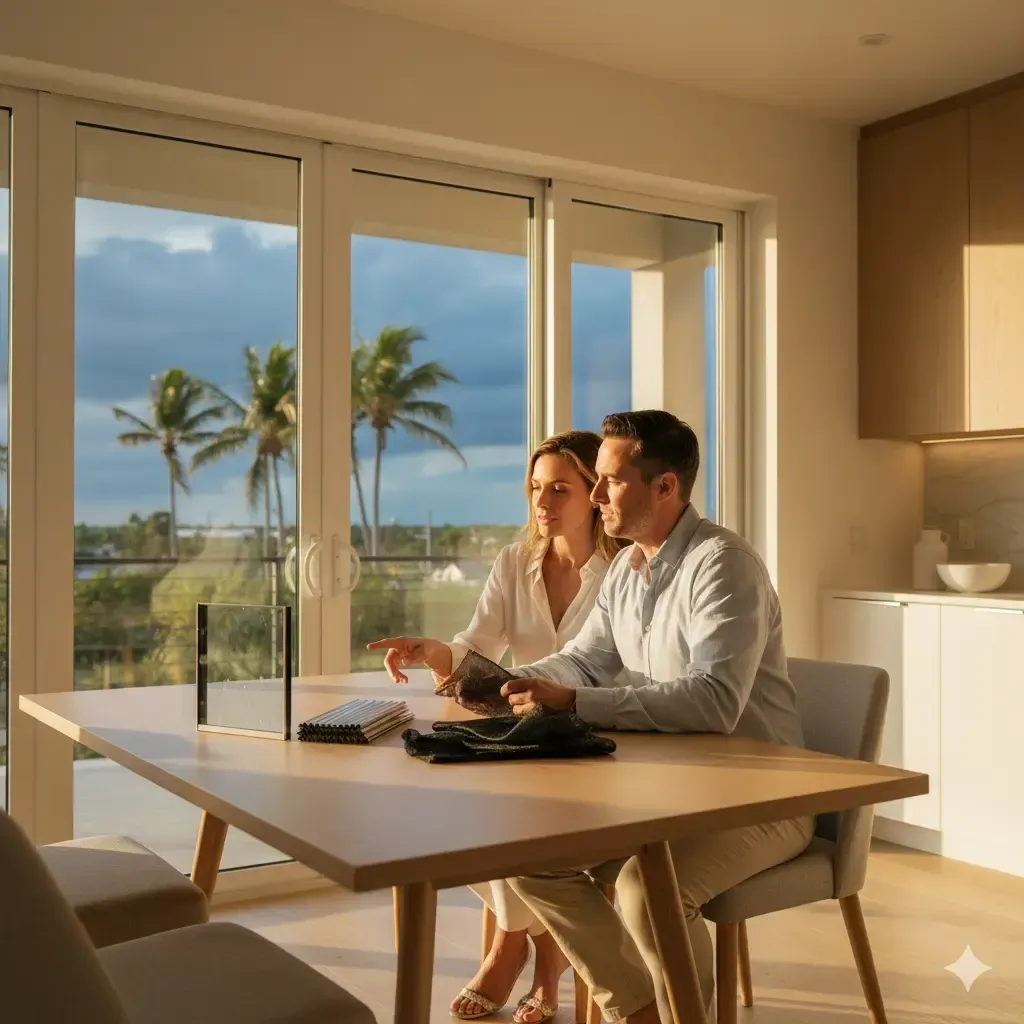
Shutters vs. Screens vs. Impact Glass: An Honest Comparison for 2026
Tired of sales pitches? We break down honest pros and cons of the five major hurricane protection options for 2026 — from impact glass's "always-on" convenience to modern screens' visibility. Find which system fits your home, budget, and lifestyle. Read more...
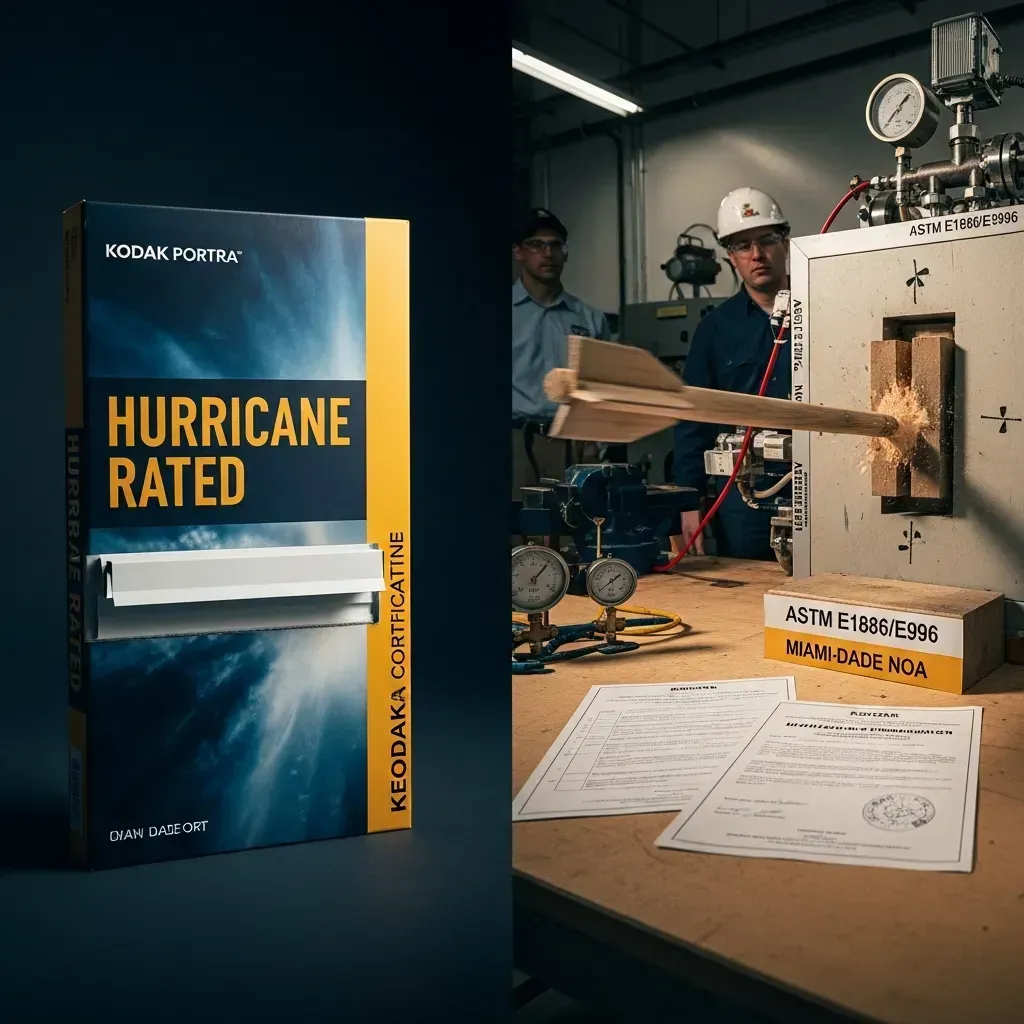
What 'Hurricane Rated' Actually Means: Testing Standards vs. Marketing Language
Hurricane rated" isn't a regulated term — anyone can print it on a box. Learn what ASTM E1996 and Miami-Dade TAS 201/202/203 actually test, and seven questions to ask before you trust any contractor's claim. Read more...
Category 3 Major Hurricane: 111-129 MPH Winds & Devastating Damage
Category 3 major hurricanes cause devastating damage with 111-129 mph winds. Learn why Katrina and Alicia changed communities forever at this threshold. Read more...
What Is the Best Hurricane Screen? How to Judge One Without the Marketing
There is no single best hurricane screen. Four things separate a system worth buying from one that only looks good in a brochure. Here is the checklist. Read more...
Company
MaxForce™ Hurricane Screens
Design Ideas
Resources

