Motorized Hurricane Screen
Why Maxforce

MAXFORCE PROVEN PROTECT
Engineered For Excellence
For nearly two decades, MaxForce has manufactured hurricane screens to meet the most demanding building code, the High Velocity Hurricane Zone of Miami-Dade. The MaxForce track is our newest version of the fixed track we have used with great success for high wind applications all over the globe.
The benefits of a fixed track are unmatched strength - this is important when designing a screen system for hurricanes. When you want the strongest system available, and a proven veteran of many hurricanes, the MaxForce Hurricane Track is your best choice.
MAXFORCE THE #1 MOTORIZED HURRICANE SCREEN
Contact A+ Certified MaxForce Screen Dealer Today...
MAXFORCE HURRICANE SCREENS
Engineering Features
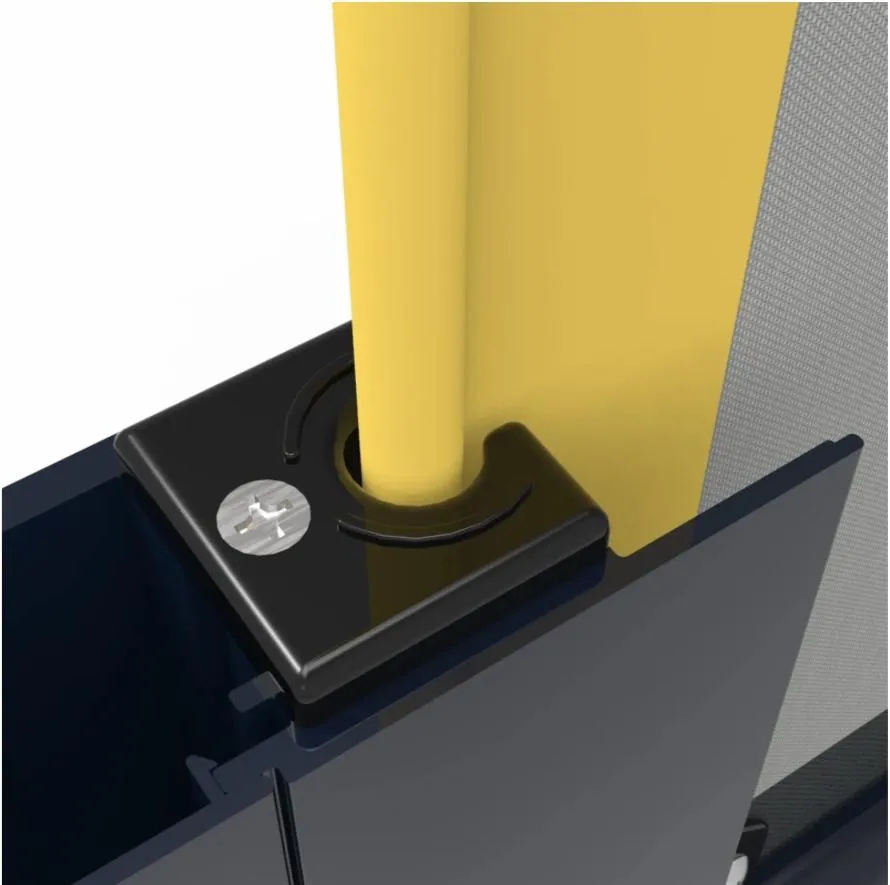
No blowouts. No rewraps. No frustration.
MaxForce is the only retractable screen system on the market designed to stay locked in the track—even in high winds. Smart motor senses resistance and adjusts seamlessly, allowing self-correction when the screen encounters an obstacle: Fewer snags, fewer jams, and fewer costly service calls.
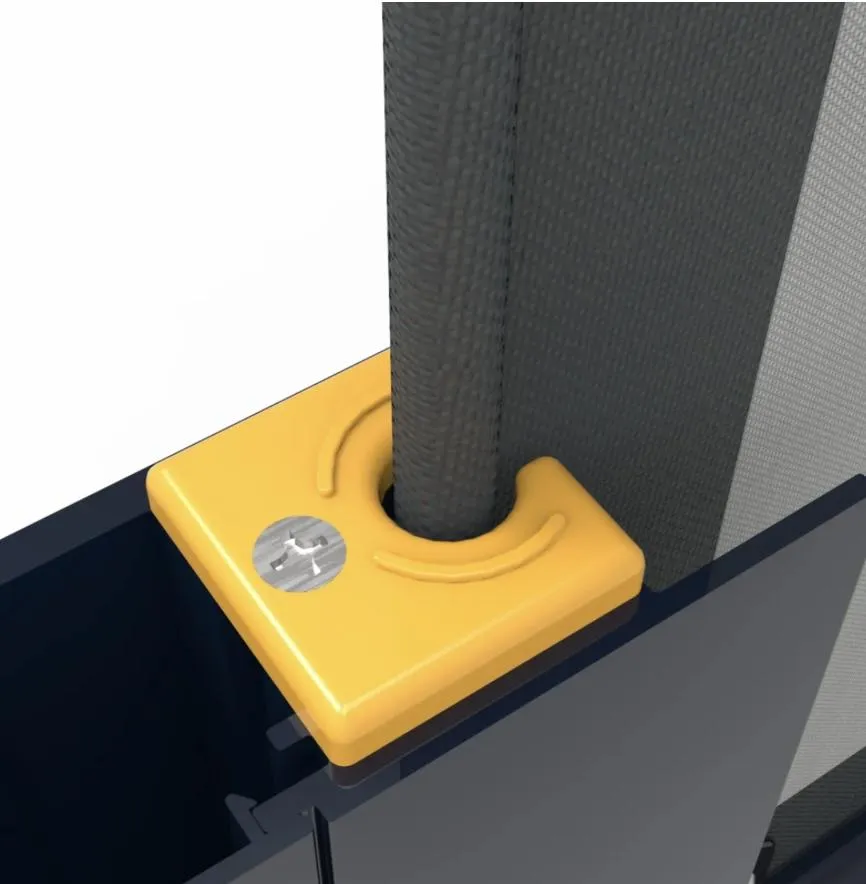
No Zipper. No Cable. Just Simple Deployment
MaxForce pioneered Keder-edge technology in motorized screens, delivering unmatched durability and simplicity. Borrowed from sailboat rigging, this system eliminates zippers, cables, and exposed hardware—ensuring smooth, reliable operation every time.
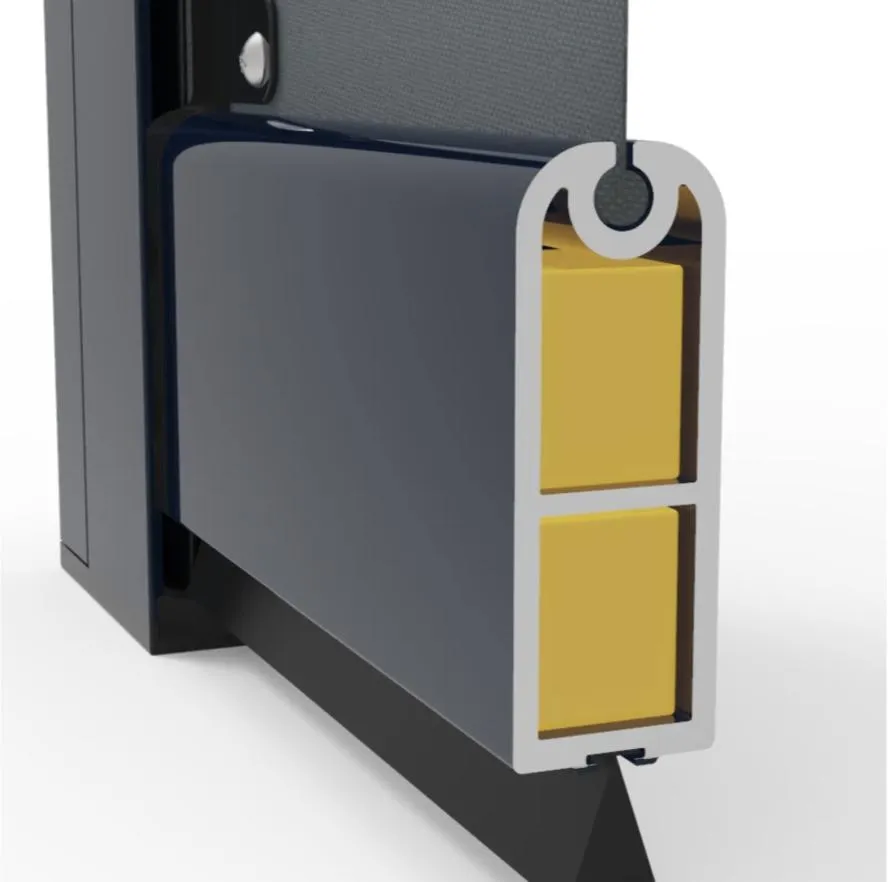
Heavy Duty
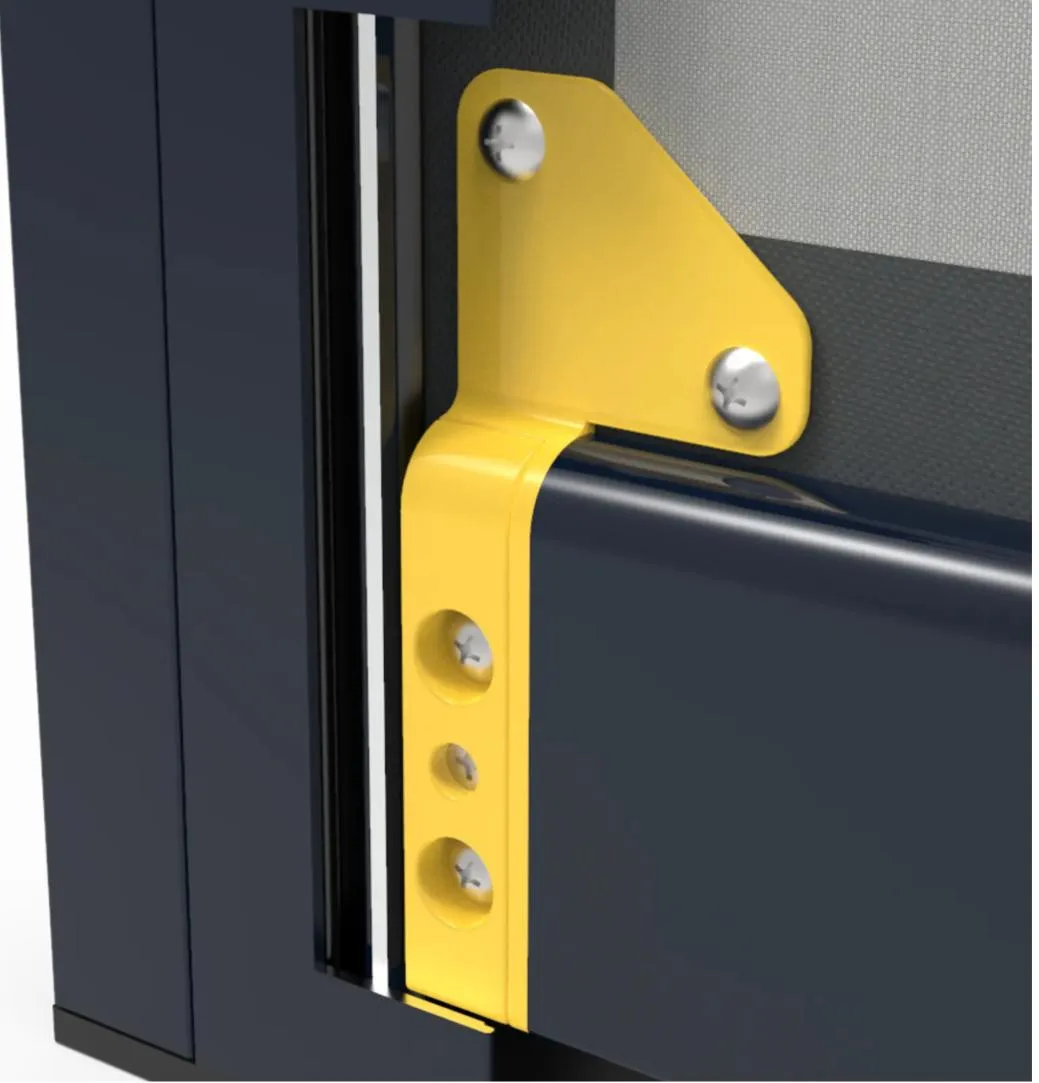
The MaxForce weight bar is engineered for strength—and built to hold its ground. Pound for pound, it’s the heaviest and most robust weight bar in the industry. This ensures proper screen tension, flawless deployment, and maximum stability in high wind zones. —limited flex, no failure.
Reinforced Corners
MaxForce’s heavy-duty weight bar isn’t just strong. It’s smart. Reinforced corners and integrated tie-ins create a unified structure that acts like a solid wall of protection when deployed. Made from high-strength nylon, this bar absorbs impacts while maintaining structural integrity.
Motorized Hurricane Screen
Why Maxforce
MAXFORCE PROVEN PROTECT
Engineered For Excellence
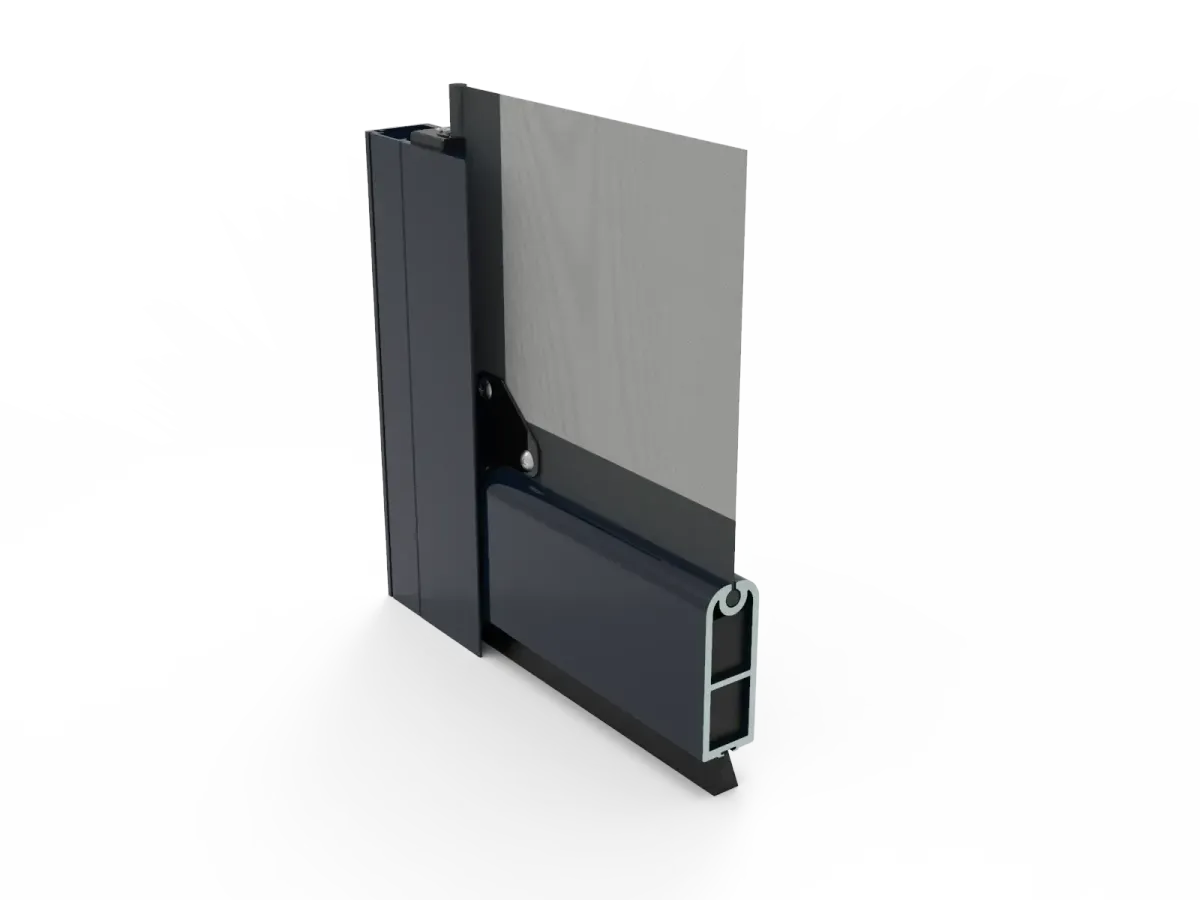
For nearly two decades, MaxForce has manufactured hurricane screens to meet the most demanding building code, the High Velocity Hurricane Zone of Miami-Dade. The MaxForce track is our newest version of the fixed track we have used with great success for high wind applications all over the globe.
The benefits of a fixed track are unmatched strength - this is important when designing a screen system for hurricanes. When you want the strongest system available, and a proven veteran of many hurricanes, the MaxForce Hurricane Track is your best choice.
MAXFORCE THE #1 MOTORIZED
HURRICANE SCREEN
Contact A+ Certified MaxForce Screen
Dealer Today...
MAXFORCE HURRICANE SCREENS
Engineering Features
No blowouts. No rewraps.
No frustration.
MaxForce is the only retractable screen system on the market designed to stay locked in the track—even in high winds. Smart motor senses resistance and adjusts seamlessly, allowing self-correction when the screen encounters an obstacle: Fewer snags, fewer jams, and fewer costly service calls.
No Zipper. No Cable.
Just Simple Deployment
MaxForce pioneered Keder-edge technology in motorized screens, delivering unmatched durability and simplicity. Borrowed from sailboat rigging, this system eliminates zippers, cables, and exposed hardware—ensuring smooth, reliable operation every time.
Heavy Duty
The MaxForce weight bar is engineered for strength—and built to hold its ground. Pound for pound, it’s the heaviest and most robust weight bar in the industry. This ensures proper screen tension, flawless deployment, and maximum stability in high wind zones. —limited flex, no failure.
Reinforced Corners
MaxForce’s heavy-duty weight bar isn’t just strong. It’s smart. Reinforced corners and integrated tie-ins create a unified structure that acts like a solid wall of protection when deployed. Made from high-strength nylon, this bar absorbs impacts while maintaining structural integrity.

HEADACHE-FREE
Exclusive self-tensioning system eliminates 99.9% of screen issues. No track adjustments, broken zippers, or dislodged screens.

LIFETIME WARRANTY
Exterior shade screens reduce cooling bills and MaxForce hurricane screens reduce insurance premiums in hurricane zones.

HURRICANE STRONG
Our MaxForce tracks and advanced hybrid ballistic fabrics withstand 150+ mph winds. Approved by Florida Building Commission for hurricane zones. Lab and real-world tested.

BUILT TO LAST
We use marine-grade materials such as powder-coated aluminum, UV-protected nylons, stainless steel fasteners, and premium fabrics. Resists corrosion, rust, and screen failure.

COST-SAVING
Exterior shade screens reduce cooling bills and MaxForce hurricane screens reduce insurance premiums in hurricane zones.

SMART CONTROLS
Control MaxForce screens via remote and
phone or integrate with popular home automation systems for advanced
capabilities.

SECURE TRACK
MaxForce Fix Hurricane Track holds firm under extreme loads

MAX CORROSION PROTECTION
Powder Coated Aluminum Protects your investment from exposer and corrosion.

HEAVY-DUTY DESIGN
Our screens are designed to withstand the extreme. High wind, Rain, or Shine, Dust Dirt, Dander, it doesn't matter. MaxForce Cover it all.

CUSTOM-MADE SCREENS
Tailor-made screens with vast color, fabric, and system options. Custom paint color and fabric matching are available.
MAXFORCE THE #1 MOTORIZED HURRICANE SCREEN
Contact A+ Certified MaxForce Screen Dealer Today...
HEADACHE-FREE
Exclusive self-tensioning system eliminates 99.9% of screen issues.
No track adjustments, broken zippers,
or dislodged screens.
LIFETIME WARRANTY
Exterior shade screens reduce cooling
bills and MaxForce hurricane screens
reduce insurance premiums in
hurricane zones.
HURRICANE STRONG
Our MaxForce tracks and advanced hybrid ballistic fabrics withstand
150+ mph winds. Approved by Florida Building Commission for hurricane
zones. Lab and real-world tested.
BUILT TO LAST
We use marine-grade materials such
as powder-coated aluminum, UV-protected nylons, stainless steel
fasteners, and premium fabrics. Resists corrosion, rust, and screen failure.
COST-SAVING
Exterior shade screens reduce cooling
bills and MaxForce hurricane screens
reduce insurance premiums in
hurricane zones.
SMART CONTROLS
Control MaxForce screens via remote and
phone or integrate with popular home automation systems for advanced
capabilities.
SECURE TRACK
MaxForce Fix Hurricane Track holds firm under extreme loads
MAX CORROSION PROTECTION
Powder Coated Aluminum Protects your investment from exposer and corrosion.
HEAVY-DUTY DESIGN
Our screens are designed to withstand
the extreme. High wind, Rain, or Shine,
Dust Dirt, Dander, it doesn't matter. MaxForce Cover it all.
CUSTOM-MADE SCREENS
Tailor-made screens with vast color, fabric, and system options. Custom
paint color and fabric matching are available.
MAXFORCE THE #1 MOTORIZED
HURRICANE SCREEN
Contact A+ Certified MaxForce Screen
Dealer Today...
MAXFORCE
Ready For Life's Storms
MAXFORCE HURRICANE SCREEN SYSTEM
A Certified, Tested System...
The MaxForce Hurricane Screen System meets or exceeds Miami-Dade and Florida Building Code requirements—the toughest hurricane codes on earth—for roll-down hurricane screens. Rated for the 185 MPH wind zone, and with real-world and certified testing. With spans of up to 25 feet, they exceed performance criteria for all local and International Building Codes.
MAXFORCE THE #1 MOTORIZED HURRICANE SCREEN
Contact A+ Certified MaxForce Screen Dealer Today...
MAXFORCE
Ready For Life's Storms
MAXFORCE HURRICANE SCREEN SYSTEM
A Certified, Tested System...
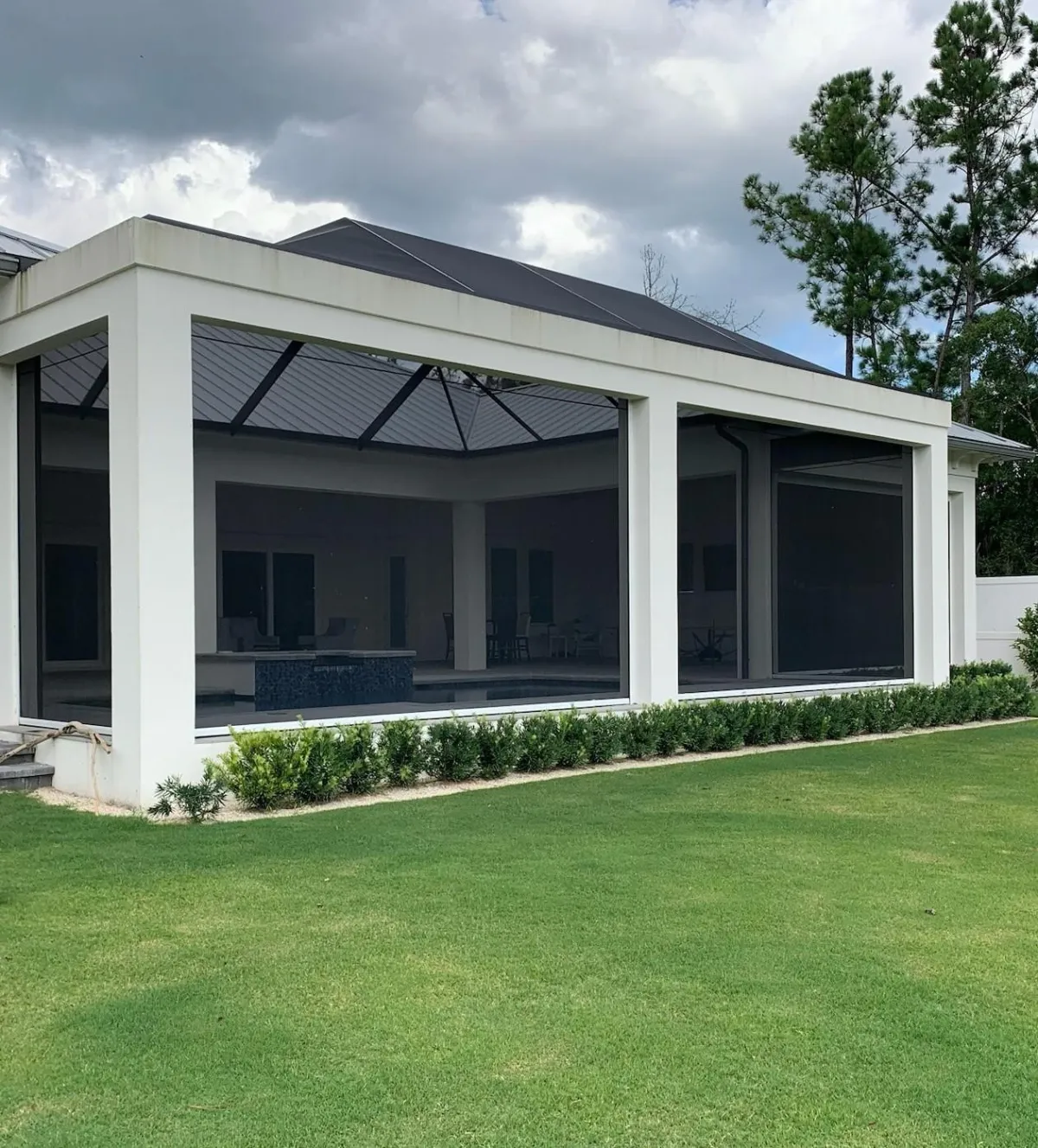
The MaxForce Hurricane Screen System meets or exceeds Miami-Dade and Florida Building Code requirements—the toughest hurricane codes on earth—for roll-down hurricane screens. Rated for the 185 MPH wind zone, and with real-world and certified testing. With spans of up to 25 feet, they exceed performance criteria for all local and International Building Codes.
MAXFORCE THE #1 MOTORIZED
HURRICANE SCREEN
Contact A+ Certified MaxForce Screen
Dealer Today...
THE MAXFORCE DIFFERENCE
Maxforce Hurricane Screen
THE MAXFORCE DIFFERENCE
MaxForce Hurricane Screen
MaxForce Hurricane Screens, powered by our MaxForce system, meet the toughest standards—including HVHZ certification in Miami-Dade and Broward. They last longer, resist more, and do more than any screen on the market—proven protection without compromise.
MaxForce Hurricane Screens —Delivers 365 days of perfect protection, rain or shine, on your patio and lanai. With the push of a button or a tap on the mobile app, your patio is storm-ready— furniture and openings fully protected in seconds.
MaxForce Hurricane Screens fabric blocks up to 95% of the sun’s damaging UV-rays while shielding against wind, rain, insects, dust, and debris. It also helps reduce heat and lower energy costs by limiting solar exposure—comfort and protection in one smart solution.
Like all Maxforce products, our MaxForce Hurricane Screens are highly customizable and built to order—made to fit your exact openings. No guesswork, no compromises—just precision-fit protection tailored to your space.
Pair our retractable MaxForce Hurricane Screens with other Maxforce screens for customized and independent solutions. Each screen operates independently, giving you the protection you want when you need it.
MaxForce Hurricane Screens offer built-in privacy without blocking your view. Like a two-way mirror, you can see out—but neighbors and passersby can not see in. It provides the perfect blend of openness and seclusion, day or night.
MAXFORCE THE #1 MOTORIZED HURRICANE SCREEN
Contact A+ Certified MaxForce Screen Dealer Today...
INTEGRITY MATTERS
How MaxForce Is Made Matters
MaxForce Hurricane Screens, powered by our MaxForce system, meet the toughest standards—including HVHZ certification in Miami-Dade and Broward. They last longer, resist more, and do more than any screen on the market—proven protection without compromise.
.
MaxForce Hurricane Screens —Delivers 365 days of perfect protection, rain or shine, on your patio and lanai. With the push of a button or a tap on the mobile app, your patio is storm-ready— furniture and openings fully protected in seconds.
MaxForce Hurricane Screens fabric blocks up to 95% of the sun’s damaging UV-rays while shielding against wind, rain, insects, dust, and debris. It also helps reduce heat and lower energy costs by limiting solar exposure—comfort and protection in one smart solution.
.
Like all Maxforce products, our MaxForce Hurricane Screens are highly customizable and built to order—made to fit your exact openings. No guesswork, no compromises—just precision-fit protection tailored to your space.
.
Pair our retractable MaxForce Hurricane Screens with other Maxforce screens for customized and independent solutions. Each screen operates independently, giving you the protection you want when you need it.
.
MaxForce Hurricane Screens offer built-in privacy without blocking your view. Like a two-way mirror, you can see out—but neighbors and passersby can not see in. It provides the perfect blend of openness and seclusion, day or night.
.
MAXFORCE THE #1 MOTORIZED
HURRICANE SCREEN
Contact A+ Certified MaxForce Screen
Dealer Today...
INTEGRITY MATTERS
How MaxForce Is
Made Matters
AMERICAN INGENUITY
Made in the USA.

Proudly Made in the USA—every MaxForce screen is built with American strength, precision, and pride. From the smallest components to the final assembly, our materials are sourced and manufactured right here in the United States. No outsourcing. No compromises. Just hardworking Americans protecting American homes with the toughest screen system on the market.
Why Most Hurricane Preparation Fails Before the Storm | Florida Living Outdoor
This Is the Year You Stop Scrambling: Why Most Hurricane Preparation Fails Before the Storm Arrives
You remember the morning. Not the date — nobody remembers the date until later,
when the date is all anyone can talk about. You remember the feeling. The phone
buzzing on the nightstand with a sound you hadn't heard before, a tone reserved for the
kind of news your body understands faster than your mind.
A hurricane was coming.
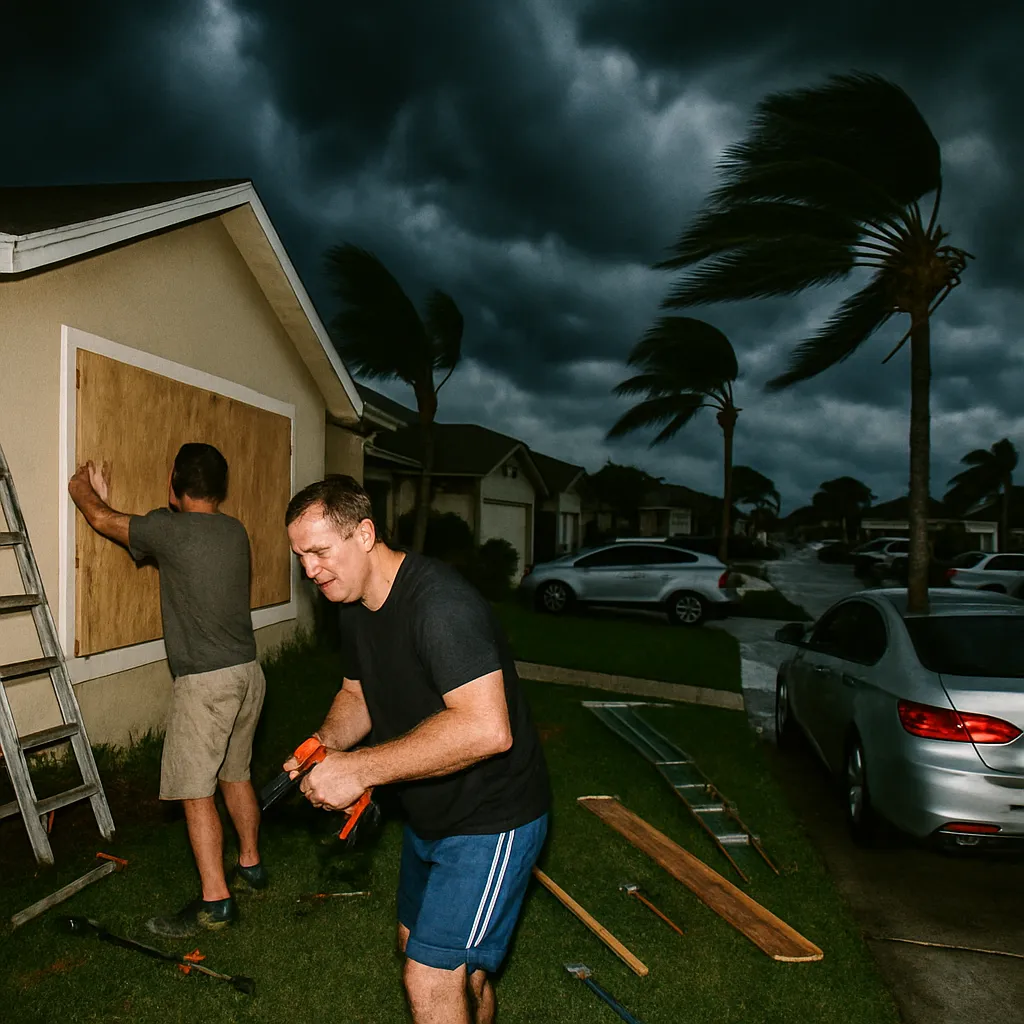
You got out of bed and did what millions of homeowners do every single time: you
scrambled. You drove to the hardware store at seven in the morning and found the
parking lot already full, the plywood aisle already stripped, a line of people with the
same look on their faces — the look that says I should have done this months ago. You
called the contractor you'd been meaning to call since last spring, the one whose card
had been sitting on the kitchen counter since March, and the voicemail was full. You
filled bathtubs. You moved patio furniture. You argued about whether the shutters from
three storms ago still fit the windows that were replaced two years back.
You taped. You stacked. You improvised.
The hours blurred. You remember the heat in the garage and the sound of the circular
saw at a time of night when no one should be running a circular saw. You remember the
neighbors doing the same thing, a whole street of families trying to compress weeks of
preparation into hours, everyone polite and urgent and slightly embarrassed.
And somewhere in the middle of it all — maybe in the checkout line, maybe standing in
the driveway with a piece of plywood that was three inches too short — you said the
thing you've said before. The thing every homeowner in every hurricane state has said at
least once.
"Next year, I'm doing this early."
Next year came. You didn't.
This is not a story about laziness. It is not a story about irresponsibility, or carelessness,
or any of the other words people use when they assume the problem is character. It is a
story about how the human brain processes distant threats — and why that processing
almost guarantees that homeowners who care deeply about protecting their families will
still find themselves scrambling when the next storm approaches.
The pattern is predictable. It is documented by researchers across multiple disciplines.
And once you see it clearly — once you can name the invisible forces that drive it — it
becomes possible to break.
That is what this article is about. Not guilt. Not another checklist you'll bookmark and
forget. Understanding.
Why Do Homeowners Delay Hurricane Preparation?
The answer is not negligence. The answer is neuroscience.
Four cognitive biases — patterns identified and named by researchers over decades of
study — work together to make hurricane preparation delay almost inevitable for
homeowners who rely on reactive, per-storm methods. Understanding these biases is
the first step toward defeating them.
Availability bias is the tendency to judge the likelihood of an event based on how
easily examples come to mind. Psychologists Amos Tversky and Daniel Kahneman
identified this pattern in their foundational 1973 research at Hebrew University. When a
hurricane hasn't struck recently, the mental images of destruction fade. The plywood-
and-panic memories lose their sharpness. The brain, scanning for threats, finds nothing
vivid — and concludes, without conscious input, that the threat has receded. It hasn't.
Only the memory has.
Recency bias compounds this effect. Research from East Carolina University
examining home values and flood risk behavior after Hurricanes Fran and Floyd found
that risk perception decays measurably over time following a disaster. Homeowners who
had vivid, recent hurricane experiences took protective action. Those same
homeowners, two or three years later, behaved as though the risk had diminished —
even though the meteorological reality hadn't changed at all. The storm didn't become
less likely. The memory simply became less loud.
Optimism bias adds a third layer. Harvard's Ash Center for Democratic Governance
and Innovation has documented how individuals consistently underestimate their
personal vulnerability to negative events, even when they accurately assess the general
risk. A homeowner might agree that hurricanes cause devastating damage in Florida.
That same homeowner, asked about their own home, will rate their personal risk as
lower than average. The logic feels sound: My house survived last time. My
neighborhood is a little more inland. I've been lucky. Optimism bias doesn't feel like
denial. It feels like reasonable assessment. That is precisely what makes it dangerous.
Present bias — the tendency to weigh immediate costs more heavily than future
benefits — completes the pattern. Kahneman and Tversky's loss aversion research
demonstrates that the human brain discounts future outcomes in favor of present
comfort. Spending $15,000 on hurricane protection in March, when the sky is clear and
the season is months away, feels like pain without purpose. Spending that same $15,000
in June, when a named storm is spinning in the Gulf, feels urgent and necessary — but
by then, the contractors are booked, the materials are scarce, and the prices have
climbed.
These four biases do not operate in isolation. They reinforce each other in a cycle that
repeats with mechanical reliability. The memory fades (availability). Time passes
(recency). The homeowner feels personally safe (optimism). The cost feels premature
(present bias). And every year, the scramble begins again.
The Annual Cycle That Sets Homeowners Up to Fail
Every June 1st, the same sequence unfolds across the same geography, with the same
cast of characters playing the same roles. NOAA releases its seasonal forecast. The
media amplifies it. A graphic with a number — fourteen storms, seven hurricanes, three
major — appears on every local newscast between Brownsville and Bangor.
Homeowners across the Gulf Coast and Atlantic seaboard experience a brief spike of
concern — what researchers call a "risk salience event" — and a fraction of them take
action.
Most don't. Not because they don't care. Because the biases described above are
strongest precisely when the threat is most abstract: months away, unnamed, and
statistically distributed across a vast geography. A forecast that says "above-average
season" activates no specific fear. It sounds like weather. It feels manageable.
Then a storm forms. The cone appears on every screen. And the scramble begins.
Every June, hardware stores across Florida sell out of plywood within 48 hours of the
first named storm entering the Gulf. Every June, contractors who install shutters,
screens, and impact-rated systems report that their phones begin ringing at a volume
they cannot physically answer. Every June, the same homeowners who spent a quiet
March evening grilling on the patio are now standing in a line that wraps around the
building, buying supplies they could have ordered eight weeks ago at half the stress and
two-thirds the cost.
Reporting from the Associated Press after Hurricane Ian documented multi-week
backlogs for basic protection materials in southwest Florida — not because the materials
didn't exist, but because demand concentrated into a window of days that no supply
chain on earth can serve. Roofers, shutter installers, and window replacement
companies reported booking out through the end of the season within 72 hours of the
storm's projected track reaching Florida.
The economics of this pattern are punishing. Prices rise under demand pressure. Lead
times extend from days to weeks to months. Quality of installation suffers when work
that should take a full day is compressed into an afternoon because there are six more
houses on the list. Homeowners who would have had weeks to research, compare,
evaluate, and choose in March now have hours to grab whatever is available in
September.
And then the storm passes. Or it tracks east. Or it weakens to a tropical depression fifty
miles offshore. And here is the cruelest part of the cycle: a near-miss reinforces the
optimism bias. See? It wasn't that bad. I was fine. I knew I'd be fine. The emotional
urgency that briefly overrode the biases evaporates. The cycle resets. The memory fades.
March arrives again, and the phone doesn't ring.
This pattern is not unique to any individual homeowner. It is not a personal failing. It is
a system-level failure built into the way hurricane preparation is culturally structured in
the United States: as a per-storm reaction rather than a permanent condition of
readiness. The system itself assumes that preparation is seasonal, temporary, and event-
driven. And homeowners — even smart, responsible, well-intentioned homeowners —
follow the system's logic to its inevitable conclusion.
When Should You Start Preparing for Hurricane Season?
March. Not May. Not June. March.
The optimal window for hurricane preparation runs from early March through mid-
May. During this period, contractors have open schedules. Material suppliers carry full
inventory. Pricing reflects standard market rates, not demand-driven premiums.
Homeowners who begin structural preparation in March — the permanent, high-impact
investments like opening protection, roof reinforcement, and building envelope
improvements — operate at a significant strategic advantage over those who wait for the
season to force their hand.
There is a psychological reason why March matters beyond logistics. Behavioral
researchers describe something called the Fresh Start Effect — the phenomenon where
temporal landmarks like the beginning of a new season, a new year, or a new quarter
create natural moments of heightened motivation. The transition from winter to spring
is one of these landmarks. It is the moment when homeowners look at their outdoor
spaces, their homes, their plans for the year ahead, and feel a genuine — if fleeting —
impulse to act differently than they did last time. The Fresh Start Effect is real. But it is
also fragile. Without action, it fades within weeks, and the biases reassert themselves.
FEMA's own guidance emphasizes that preparation should begin well before hurricane
season, which officially starts June 1st. But the agency's messaging focuses primarily on
supplies: water, batteries, documents, evacuation routes. These matter. They are also
the last things a homeowner should address — not the first.
Structural preparation — the physical protection of your home's openings, roof, and
envelope — requires lead time that supply-level preparation does not. You can buy
batteries in an afternoon. You cannot install hurricane-rated opening protection in an
afternoon. The homeowners who are genuinely prepared on June 1st are the ones who
began thinking about structure in March, when the Fresh Start impulse was still alive
and the calendar was still on their side.
What If the Answer Isn't Preparing Faster?
For decades, the hurricane preparation conversation has operated on a single
assumption: that preparation is something you do each time a storm approaches. The
only question was whether you did it well or badly, early or late.
But a growing number of homeowners have stepped outside that framework entirely.
They've recognized that the cycle — the annual scramble, the biases, the stress, the
gamble — is not a problem to be solved within its own logic. It is a problem to be
replaced.
The replacement is permanent, installed protection: systems that are part of your
home's structure year-round, deployable in minutes rather than hours, and engineered
to meet verified wind-load and impact standards. These systems don't require plywood
runs. They don't require contractor availability during peak demand. They don't require
the homeowner to predict, time, or outrun the weather.
This is not a product recommendation. Not yet. This is a category introduction — a
different way of thinking about what preparation means. Instead of asking "How do I
prepare better each year?" the question becomes "How do I prepare once?"
The distinction matters because it changes which cognitive biases are in play. A one-
time decision made in March, outside the pressure of an approaching storm, engages
the rational, planning-oriented prefrontal cortex. A per-storm scramble in September
engages the amygdala — the brain's fear center — where decisions are faster, worse, and
more expensive.
The rest of this twelve-part series will explore what that one-time decision looks like: the
building science behind it, the economics of it, the engineering that makes it possible,
and the specific steps to evaluate whether it's right for your home. But before any of that
can matter, this first piece had to do one thing.
It had to show you the pattern. Because you can't break a cycle you haven't named.
What Cognitive Biases Affect Hurricane Preparation Decisions?
Four well-documented cognitive biases directly influence how homeowners approach
hurricane preparation. Availability bias causes people to underestimate hurricane
risk when recent storms haven't affected them personally, because the brain judges
probability by how easily examples come to mind (Tversky & Kahneman, 1973).
Recency bias causes risk perception to decay over time after a hurricane, even though
actual risk remains constant. Optimism bias leads homeowners to rate their personal
vulnerability as lower than average, even when they accurately assess general hurricane
risk. Present bias makes future benefits (storm protection) feel less valuable than
immediate costs (money spent today), discouraging preseason investment. Together,
these biases create a predictable cycle of delay that repeats each hurricane season.

Company
MaxForce Hurricane Screens
Design Ideals
Resources


© 2025 Maxforce - Powered by Fenetex and Friends of Oatis
AMERICAN INGENUITY
Made in the USA
Proudly Made in the USA—every MaxForce screen is built with American strength, precision, and pride. From the smallest components to the final assembly, our materials are sourced and manufactured right here in the United States. No outsourcing. No compromises. Just hardworking Americans protecting American homes with the toughest screen system on the market.
Why Most Hurricane Preparation Fails Before the Storm | Florida Living Outdoor
This Is the Year You Stop Scrambling: Why Most Hurricane Preparation Fails Before the Storm Arrives
You remember the morning. Not the date — nobody remembers the date until later,
when the date is all anyone can talk about. You remember the feeling. The phone
buzzing on the nightstand with a sound you hadn't heard before, a tone reserved for the
kind of news your body understands faster than your mind.
A hurricane was coming.
You got out of bed and did what millions of homeowners do every single time: you
scrambled. You drove to the hardware store at seven in the morning and found the
parking lot already full, the plywood aisle already stripped, a line of people with the
same look on their faces — the look that says I should have done this months ago. You
called the contractor you'd been meaning to call since last spring, the one whose card
had been sitting on the kitchen counter since March, and the voicemail was full. You
filled bathtubs. You moved patio furniture. You argued about whether the shutters from
three storms ago still fit the windows that were replaced two years back.
You taped. You stacked. You improvised.
The hours blurred. You remember the heat in the garage and the sound of the circular
saw at a time of night when no one should be running a circular saw. You remember the
neighbors doing the same thing, a whole street of families trying to compress weeks of
preparation into hours, everyone polite and urgent and slightly embarrassed.
And somewhere in the middle of it all — maybe in the checkout line, maybe standing in
the driveway with a piece of plywood that was three inches too short — you said the
thing you've said before. The thing every homeowner in every hurricane state has said at
least once.
"Next year, I'm doing this early."
Next year came. You didn't.
This is not a story about laziness. It is not a story about irresponsibility, or carelessness,
or any of the other words people use when they assume the problem is character. It is a
story about how the human brain processes distant threats — and why that processing
almost guarantees that homeowners who care deeply about protecting their families will
still find themselves scrambling when the next storm approaches.
The pattern is predictable. It is documented by researchers across multiple disciplines.
And once you see it clearly — once you can name the invisible forces that drive it — it
becomes possible to break.
That is what this article is about. Not guilt. Not another checklist you'll bookmark and
forget. Understanding.
Why Do Homeowners Delay Hurricane Preparation?
The answer is not negligence. The answer is neuroscience.
Four cognitive biases — patterns identified and named by researchers over decades of
study — work together to make hurricane preparation delay almost inevitable for
homeowners who rely on reactive, per-storm methods. Understanding these biases is
the first step toward defeating them.
Availability bias is the tendency to judge the likelihood of an event based on how
easily examples come to mind. Psychologists Amos Tversky and Daniel Kahneman
identified this pattern in their foundational 1973 research at Hebrew University. When a
hurricane hasn't struck recently, the mental images of destruction fade. The plywood-
and-panic memories lose their sharpness. The brain, scanning for threats, finds nothing
vivid — and concludes, without conscious input, that the threat has receded. It hasn't.
Only the memory has.
Recency bias compounds this effect. Research from East Carolina University
examining home values and flood risk behavior after Hurricanes Fran and Floyd found
that risk perception decays measurably over time following a disaster. Homeowners who
had vivid, recent hurricane experiences took protective action. Those same
homeowners, two or three years later, behaved as though the risk had diminished —
even though the meteorological reality hadn't changed at all. The storm didn't become
less likely. The memory simply became less loud.
Optimism bias adds a third layer. Harvard's Ash Center for Democratic Governance
and Innovation has documented how individuals consistently underestimate their
personal vulnerability to negative events, even when they accurately assess the general
risk. A homeowner might agree that hurricanes cause devastating damage in Florida.
That same homeowner, asked about their own home, will rate their personal risk as
lower than average. The logic feels sound: My house survived last time. My
neighborhood is a little more inland. I've been lucky. Optimism bias doesn't feel like
denial. It feels like reasonable assessment. That is precisely what makes it dangerous.
Present bias — the tendency to weigh immediate costs more heavily than future
benefits — completes the pattern. Kahneman and Tversky's loss aversion research
demonstrates that the human brain discounts future outcomes in favor of present
comfort. Spending $15,000 on hurricane protection in March, when the sky is clear and
the season is months away, feels like pain without purpose. Spending that same $15,000
in June, when a named storm is spinning in the Gulf, feels urgent and necessary — but
by then, the contractors are booked, the materials are scarce, and the prices have
climbed.
These four biases do not operate in isolation. They reinforce each other in a cycle that
repeats with mechanical reliability. The memory fades (availability). Time passes
(recency). The homeowner feels personally safe (optimism). The cost feels premature
(present bias). And every year, the scramble begins again.
The Annual Cycle That Sets Homeowners Up to Fail
Every June 1st, the same sequence unfolds across the same geography, with the same
cast of characters playing the same roles. NOAA releases its seasonal forecast. The
media amplifies it. A graphic with a number — fourteen storms, seven hurricanes, three
major — appears on every local newscast between Brownsville and Bangor.
Homeowners across the Gulf Coast and Atlantic seaboard experience a brief spike of
concern — what researchers call a "risk salience event" — and a fraction of them take
action.
Most don't. Not because they don't care. Because the biases described above are
strongest precisely when the threat is most abstract: months away, unnamed, and
statistically distributed across a vast geography. A forecast that says "above-average
season" activates no specific fear. It sounds like weather. It feels manageable.
Then a storm forms. The cone appears on every screen. And the scramble begins.
Every June, hardware stores across Florida sell out of plywood within 48 hours of the
first named storm entering the Gulf. Every June, contractors who install shutters,
screens, and impact-rated systems report that their phones begin ringing at a volume
they cannot physically answer. Every June, the same homeowners who spent a quiet
March evening grilling on the patio are now standing in a line that wraps around the
building, buying supplies they could have ordered eight weeks ago at half the stress and
two-thirds the cost.
Reporting from the Associated Press after Hurricane Ian documented multi-week
backlogs for basic protection materials in southwest Florida — not because the materials
didn't exist, but because demand concentrated into a window of days that no supply
chain on earth can serve. Roofers, shutter installers, and window replacement
companies reported booking out through the end of the season within 72 hours of the
storm's projected track reaching Florida.
The economics of this pattern are punishing. Prices rise under demand pressure. Lead
times extend from days to weeks to months. Quality of installation suffers when work
that should take a full day is compressed into an afternoon because there are six more
houses on the list. Homeowners who would have had weeks to research, compare,
evaluate, and choose in March now have hours to grab whatever is available in
September.
And then the storm passes. Or it tracks east. Or it weakens to a tropical depression fifty
miles offshore. And here is the cruelest part of the cycle: a near-miss reinforces the
optimism bias. See? It wasn't that bad. I was fine. I knew I'd be fine. The emotional
urgency that briefly overrode the biases evaporates. The cycle resets. The memory fades.
March arrives again, and the phone doesn't ring.
This pattern is not unique to any individual homeowner. It is not a personal failing. It is
a system-level failure built into the way hurricane preparation is culturally structured in
the United States: as a per-storm reaction rather than a permanent condition of
readiness. The system itself assumes that preparation is seasonal, temporary, and event-
driven. And homeowners — even smart, responsible, well-intentioned homeowners —
follow the system's logic to its inevitable conclusion.
When Should You Start Preparing for Hurricane Season?
March. Not May. Not June. March.
The optimal window for hurricane preparation runs from early March through mid-
May. During this period, contractors have open schedules. Material suppliers carry full
inventory. Pricing reflects standard market rates, not demand-driven premiums.
Homeowners who begin structural preparation in March — the permanent, high-impact
investments like opening protection, roof reinforcement, and building envelope
improvements — operate at a significant strategic advantage over those who wait for the
season to force their hand.
There is a psychological reason why March matters beyond logistics. Behavioral
researchers describe something called the Fresh Start Effect — the phenomenon where
temporal landmarks like the beginning of a new season, a new year, or a new quarter
create natural moments of heightened motivation. The transition from winter to spring
is one of these landmarks. It is the moment when homeowners look at their outdoor
spaces, their homes, their plans for the year ahead, and feel a genuine — if fleeting —
impulse to act differently than they did last time. The Fresh Start Effect is real. But it is
also fragile. Without action, it fades within weeks, and the biases reassert themselves.
FEMA's own guidance emphasizes that preparation should begin well before hurricane
season, which officially starts June 1st. But the agency's messaging focuses primarily on
supplies: water, batteries, documents, evacuation routes. These matter. They are also
the last things a homeowner should address — not the first.
Structural preparation — the physical protection of your home's openings, roof, and
envelope — requires lead time that supply-level preparation does not. You can buy
batteries in an afternoon. You cannot install hurricane-rated opening protection in an
afternoon. The homeowners who are genuinely prepared on June 1st are the ones who
began thinking about structure in March, when the Fresh Start impulse was still alive
and the calendar was still on their side.
What If the Answer Isn't Preparing Faster?
For decades, the hurricane preparation conversation has operated on a single
assumption: that preparation is something you do each time a storm approaches. The
only question was whether you did it well or badly, early or late.
But a growing number of homeowners have stepped outside that framework entirely.
They've recognized that the cycle — the annual scramble, the biases, the stress, the
gamble — is not a problem to be solved within its own logic. It is a problem to be
replaced.
The replacement is permanent, installed protection: systems that are part of your
home's structure year-round, deployable in minutes rather than hours, and engineered
to meet verified wind-load and impact standards. These systems don't require plywood
runs. They don't require contractor availability during peak demand. They don't require
the homeowner to predict, time, or outrun the weather.
This is not a product recommendation. Not yet. This is a category introduction — a
different way of thinking about what preparation means. Instead of asking "How do I
prepare better each year?" the question becomes "How do I prepare once?"
The distinction matters because it changes which cognitive biases are in play. A one-
time decision made in March, outside the pressure of an approaching storm, engages
the rational, planning-oriented prefrontal cortex. A per-storm scramble in September
engages the amygdala — the brain's fear center — where decisions are faster, worse, and
more expensive.
The rest of this twelve-part series will explore what that one-time decision looks like: the
building science behind it, the economics of it, the engineering that makes it possible,
and the specific steps to evaluate whether it's right for your home. But before any of that
can matter, this first piece had to do one thing.
It had to show you the pattern. Because you can't break a cycle you haven't named.
What Cognitive Biases Affect Hurricane Preparation Decisions?
Four well-documented cognitive biases directly influence how homeowners approach
hurricane preparation. Availability bias causes people to underestimate hurricane
risk when recent storms haven't affected them personally, because the brain judges
probability by how easily examples come to mind (Tversky & Kahneman, 1973).
Recency bias causes risk perception to decay over time after a hurricane, even though
actual risk remains constant. Optimism bias leads homeowners to rate their personal
vulnerability as lower than average, even when they accurately assess general hurricane
risk. Present bias makes future benefits (storm protection) feel less valuable than
immediate costs (money spent today), discouraging preseason investment. Together,
these biases create a predictable cycle of delay that repeats each hurricane season.