MaxForce™ hurricane screens: approvals, specifications and warranty

Quick answer

MaxForce™ hurricane screens are motorized retractable screens approved for use in Miami-Dade County and the High-Velocity Hurricane Zone (HVHZ) under Florida Product Approval FL8637-R15, where design wind zones can reach 185 MPH.* They are approved for specific configurations, with design pressure ratings of up to ±200 PSF depending on screen size, configuration and approved installation conditions.* Since 2026 they use Quiet Spring Technology™, a spring-tensioned track with nearly an inch of self-adjustment, and OmegaTex™ fabric made with Kevlar® fiber.

*See the Fenetex® Wind Statement for details.

FL8637-R15

Florida Product Approval

Up to ±200 PSF

Design pressure, varies by screen size, configuration and installation

Quiet Spring Technology™

Self-adjusting spring-tensioned track

Large missile impact

Tested to Missile Level D, Wind Zone 4

Approval

How is MaxForce™ approved for hurricane zones?

MaxForce™ Hurricane Screens hold Florida Product Approval FL8637-R15, demonstrating compliance with applicable Florida Building Code requirements for approved configurations. Florida Product Approvals are issued through the Florida Building Commission’s product approval system, and R15 is the approval’s current revision.

Under Florida Statute §553.842, a Florida Product Approval carrying HVHZ designation is a valid path to code compliance in the HVHZ. A Miami-Dade Notice of Acceptance is one route; it is not the only one.

The HVHZ covers Miami-Dade and Broward counties.

Why the drawings say "FL 8637.1". FL8637 is the approval; ".1" identifies the product listing within it. If you search BCIS for MaxForce™ installation drawings, that is the number you will see on each sheet.

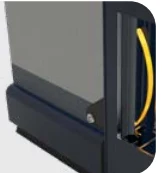
MaxForce™ self-adjusting spring retention track closeup
TermWhat it means
TestedA laboratory measured how the product performed against a named standard. A test result alone is not code compliance.
ApprovedA jurisdiction has accepted the test results as meeting its building code. FL8637-R15 is an approval.
CertifiedA general marketing term, not an instrument Florida issues for opening protection. MaxForce™’s instrument is Florida Product Approval FL8637-R15.

Testing

What tests does a hurricane screen have to pass?

MaxForce™ Hurricane Screens undergo independent laboratory testing designed to evaluate their ability to withstand the forces and impacts associated with hurricane conditions. Testing includes Florida/Miami-Dade protocols (TAS 201, 202 and 203) and applicable ASTM standards (E1886, E1996 and E330). It evaluates three performance characteristics: large-missile impact resistance, uniform static air pressure resistance, and cyclic wind pressure resistance. Successful completion of the applicable testing demonstrates the system’s ability to provide hurricane protection under the specified test conditions.

The FL8637-R15 approval rests on six named standards. Here is what each one asks of the product, in plain terms.

StandardWhat it isIn plain terms
TAS 201Miami-Dade impact test protocolA large wooden missile is fired at the product to simulate windborne debris.
TAS 202Uniform static air pressure testSteady pressure pushes on, then pulls on, the product, the way wind loads the front and back of a building.
TAS 203Cyclic wind pressure loadingSubjects the screen system to repeated positive and negative pressure cycles to evaluate its ability to maintain performance under fluctuating wind loads associated with hurricane conditions.
ASTM E1886National test method for impact and cyclic pressureThe national procedure for running the missile and cycling tests.
ASTM E1996National specification for missile levels and wind zonesSets which missile and how much cycling a product must survive for a given location.
ASTM E330Structural performance under static air pressureMeasures how the product holds up under a uniform load.

Source: FL 8637.1 installation drawings, general notes. Florida Building Code 8th Edition (2023).

Missile Level D, Wind Zone 4. These are ASTM E1996 classifications for the test missile and the pressure cycling used. They describe how MaxForce™ was tested. They are not a wind speed the screen withstands.

Design pressure

What design pressure is MaxForce™ rated for?

While hurricane strength is commonly described in terms of wind speed, building codes and structural engineers evaluate the wind resistance of building products using design pressure, measured in pounds per square foot (PSF).

MaxForce™ Hurricane Screens have design pressure ratings of up to ±200 PSF, covering both positive pressure (wind pushing against the screen) and negative pressure (wind suction pulling away from the screen). The allowable design pressure depends on the specific screen size, configuration and approved installation conditions.

Wind loads vary with the building and the location of the opening. Before a hurricane screen is specified, the required design pressure must be calculated from:

  • geographic location and applicable design wind speed

  • building height, dimensions and roof configuration

  • exposure category, including surrounding terrain and proximity to open water

  • location of the opening on the building, including proximity to corners and roof edges

  • applicable building code requirements

These calculations set the positive and negative design pressures the system must resist.

Fenetex® provides engineering tables identifying allowable design pressures for different screen dimensions, together with approved mounting configurations and anchoring requirements. Architects, engineers, contractors and building officials use them to verify that the selected system meets the structural requirements for each opening.

The FL8637-R15 schedules cover screens up to 252 inches (21 feet) tall and spans up to 300 inches (25 feet). Those are the limits of the approval, not what every opening can take.

Wide openings are divided with end and interior mullions, each sized from its own schedule.

Your site, your engineer. The approval is a non-site-specific evaluation. A design professional is responsible for applying it to each actual installation, an authorized MaxForce™ dealer installs to the approval, and your local building department permits and inspects the work.

See the Fenetex® Wind Statement for details. (place this directly under the ±200 PSF paragraph)

Wide outdoor opening protected by a MaxForce™ hurricane screen
Illustrative only. MaxForce™ is rated up to ±200 PSF; allowable design pressure depends on screen size, configuration and approved installation conditions. Actual values come from the FL8637-R15 schedules for each span.

MAXFORCE™ MOTORIZED HURRICANE SCREEN

Contact an Authorized MaxForce™ Dealer Today

Every opening gets its own span, mount and design pressure. A dealer measures yours and specifies the screen to the approval.

Quiet Spring Technology™

How does Quiet Spring Technology™ work?

In 2026 MaxForce™ moved from a fixed track to a self-adjusting one. Springs inside the side track press outward on the screen edge, holding it at even tension with nearly an inch of total self-adjustment. When a gust pushes the screen, the inner track compresses against the springs; when the gust passes, the springs return it.

It is the same spring tensioning One-Track™ screens have used since 2020, now built into the hurricane track.

Why springs, not magnet

Michael Murray, Fenetex® Co-Founder and President, on magnetic tensioning

Already own MaxForce™? The self-adjusting track works with existing MaxForce™ systems, so an upgrade does not mean replacing the whole installation. Your dealer can confirm for your openings. Building updates that work with earlier installations is one of the seven principles of Fenetex® Blue™, the design philosophy behind every Fenetex® product.

"The closer they get together, the stronger they pull."

Michael Murray, Fenetex® co-founder and President, on magnetic tensioning

Already own MaxForce™? The self-adjusting track works with existing MaxForce™ systems, so an upgrade does not mean replacing the whole installation. Your dealer can confirm for your openings.

Spring inside a MaxForce™ Quiet Spring side track
Spring inside the side track
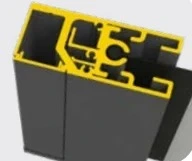
Cross-section of the MaxForce™ Quiet Spring track profile
Quiet Spring track profile
BehaviourSpringsMagnets
ForceRises evenly with compressionClimbs sharply as the gap closes
Under a gustCompresses and returns smoothlySeparates, then snaps back together
Adjusting tensionAdd or remove springs, no special toolsReposition magnet arrays along the track
Corrosion exposureNo magnets in the trackIron-based magnets rely on a protective coating

Keder edge

What is a keder, and why does it keep the screen in its track?

A keder is a PVC cord wrapped in low-friction, PVC-coated fabric, welded along the screen's edge. Fenetex® has used welded keder edges since its first screens in 2007. With approximately 20 years of experience manufacturing hurricane screens, Fenetex® has refined MaxForce™ for demanding coastal environments.

Step 1 of the MaxForce™ keder welding process: cut and insert

Cut and insert

A precisely cut screen edge is inserted into the keder.

Step 2 of the MaxForce™ keder welding process: clamp

Clamp

Welding bars above and below close on the materials at a set pressure.

Step 3 of the MaxForce™ keder welding process: radio-frequency weld

Weld

10 kW of radio-frequency energy is pulsed through the PVC, heating it from within so keder and screen fuse.

Step 4 of the MaxForce™ keder welding process: set under pressure

Set

A cooling phase under pressure sets the weld into a single piece.

Why it stays in the track

The keder bead rides inside a channel whose opening is narrower than the bead. Under wind load, the screen pulls against the inner channel, but the bead cannot pass through the slot. With Quiet Spring Technology™, the spring tension in the track allows the inner track to move forward and absorb external pressure on the fabric.

Because the edge is welded, there is no zipper to break, no stitching to wear and no adhesive to fail.

How the MaxForce™ track holds the screen under wind load Cross-section of the MaxForce™ Quiet Spring side track. Wind pulls on the screen, and the keder bead presses against the slot of the inner track's round channel. The inner track then slides forward against the Quiet Spring and locks into the grooves at the front of the outer track. With the track locked, the screen takes the wind load and bows. When the wind passes, the spring returns the inner track. Bead presses on the slot Inner track locks into the grooves Wind Outer track Inner track Quiet Spring Keder bead Screen
Cross-section of the MaxForce™ Quiet Spring side track, traced from a cut sample. Movement is simplified.

MAXFORCE™ MOTORIZED HURRICANE SCREEN

Already Own MaxForce™? Ask About Quiet Spring

The self-adjusting track works with existing MaxForce™ systems. A dealer can tell you what your openings need.

Comparison

How do motorized screen tensioning systems compare?

How each type of track holds a screen under load. Use these criteria to evaluate any system you are considering.

SystemHow tension is heldSelf-adjustmentUnder a gustField adjustmentCorrosion exposureHurricane approvalPatent statusWorks with earlier systems
MaxForce™ with Quiet Spring (2026)Springs inside the track press outward on the screen edgeNearly 1 inchCompresses and returns; no snapAdd or remove springsNo magnets in the trackFL8637-R15, HVHZTrack patent pendingYes, existing MaxForce™ systems
MaxForce™ fixed track (legacy)Fixed track holds the edge rigidlyNoneTrack holds; no travelNot applicableNo magnets in the trackFL8637-R14 (superseded by R15), HVHZSee Fenetex® patentsUpgradable to the self-adjusting track
Magnetic self-tensioning tracksNeodymium magnets pull the edge into positionVaries by productMagnets separate, then snap back togetherReposition magnet arraysIron-based magnets protected by a coatingCheck that product’s approvalVariesCheck the manufacturer
Non-adjusting tracks (zipper or fixed)Zipper or fixed retentionNoneFabric carries the load directlyNot applicableVariesCheck that product’s approvalVariesCheck the manufacturer

Mechanism descriptions from Fenetex® engineering publications, as of October 2026. Other products vary; check each manufacturer’s documents.

Standard features

What features come standard on MaxForce™ hurricane screens?

FeatureWhat it means
Florida Product ApprovalFL8637-R15 with HVHZ designation, for approved configurations.
Self-adjusting trackQuiet Spring Technology™ keeps the screen flat with nearly an inch of travel
Welded keder edgeNo zipper; the screen edge is RF-welded to the keder
No hurricane clipsNo extra clips or retainers needed for storm deployment
MotorizedThree motor brands, specified for each order
Obstacle detectionEvery motor brand stops on contact
Home automationHandheld remote with every motor; phone app via Bond Bridge Pro hub; Alexa, Google Assistant, Control4, Crestron, Savant
Built to orderMade to fit each opening exactly
Works with existing systemsThe self-adjusting track fits existing MaxForce™ installations
Heavy weight barTwo cavities for steel weights, for windy locations
Screen pre-feederGuides the screen from the reel into the side track; a Fenetex® Smart Motor™ stops descent before the screen can leave the tracks
Contour cutBottom edge cut to match sloped floors
Reinforced cornersToughened nylon guide ties the weight bar and screen together
Automatic wind deploymentDeploys from a wind sensor, so screens are down before a storm arrives

OmegaTex™ fabric

What is MaxForce™ hurricane fabric made of?

MaxForce™ uses OmegaTex™ hurricane screen fabric, woven in Dothan, Alabama by Twitchell Technical Products. Current OmegaTex™ combines vinyl-coated 1500-denier polyester core yarns in one direction with vinyl-coated 2000-denier Kevlar® core yarns in the other. Screens made before 2025 may use an earlier yarn.

The weave is 91% cover and 9% open: solid enough to stop debris, open enough to see through and let air move. It blocks up to 91% of UV rays.

The fabric meets NFPA 701 and NFPA 101 Class A fire standards, carries GREENGUARD Gold for low emissions, and passes ASTM E2180 and G21 for bacteria and fungal resistance. These are standards for the fabric itself.

Colors

White
White/Tan
Black/Tan
Black
Granite
Bronze
Manufacturer-reported results from single test samples, not specifications. Source: Twitchell OmegaTex™ technical data, January 2025.
PropertyTypical value
Weight19.5 oz/yd²
Grab tensile strength711.3 lbf warp, 748.9 lbf fill
Puncture resistance364 lbf
Bursting strength1,250+ psi
Openness9% open, 91% cover
Weave22 × 13.5

Kevlar® is a trademark of affiliates of DuPont de Nemours, Inc. OmegaTex™ is a trademark of Twitchell Technical Products, LLC.

MAXFORCE™ MOTORIZED HURRICANE SCREEN

See OmegaTex™ Colors in Person

Six fabric colors, built to order for each opening. Ask a dealer for samples and a quote.

Construction

How is a MaxForce™ hurricane screen built and mounted?

Each screen is built to order for its opening in Jacksonville, Florida, from a storage hood, roll-up assembly, Quiet Spring side tracks, welded screen and weight bar.

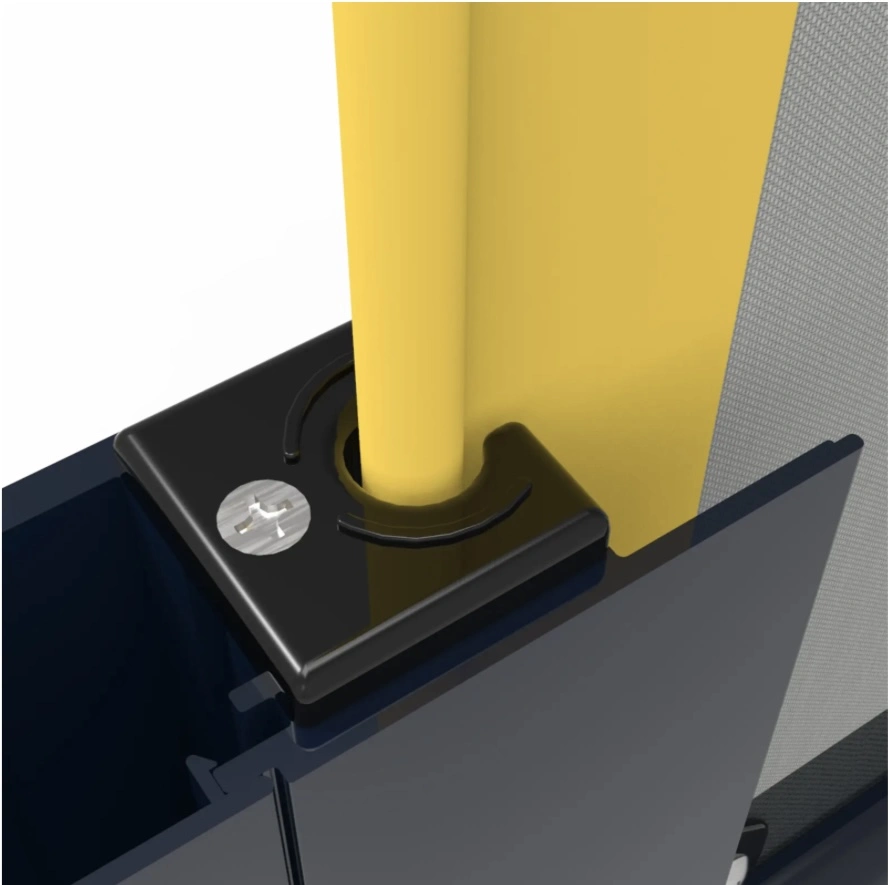
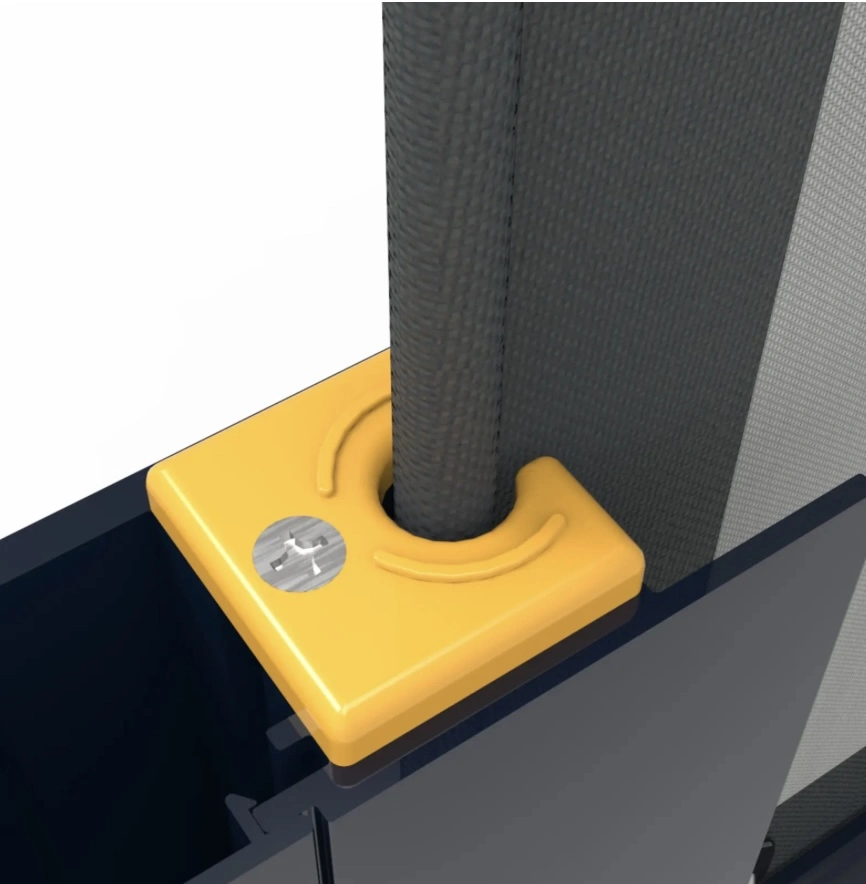
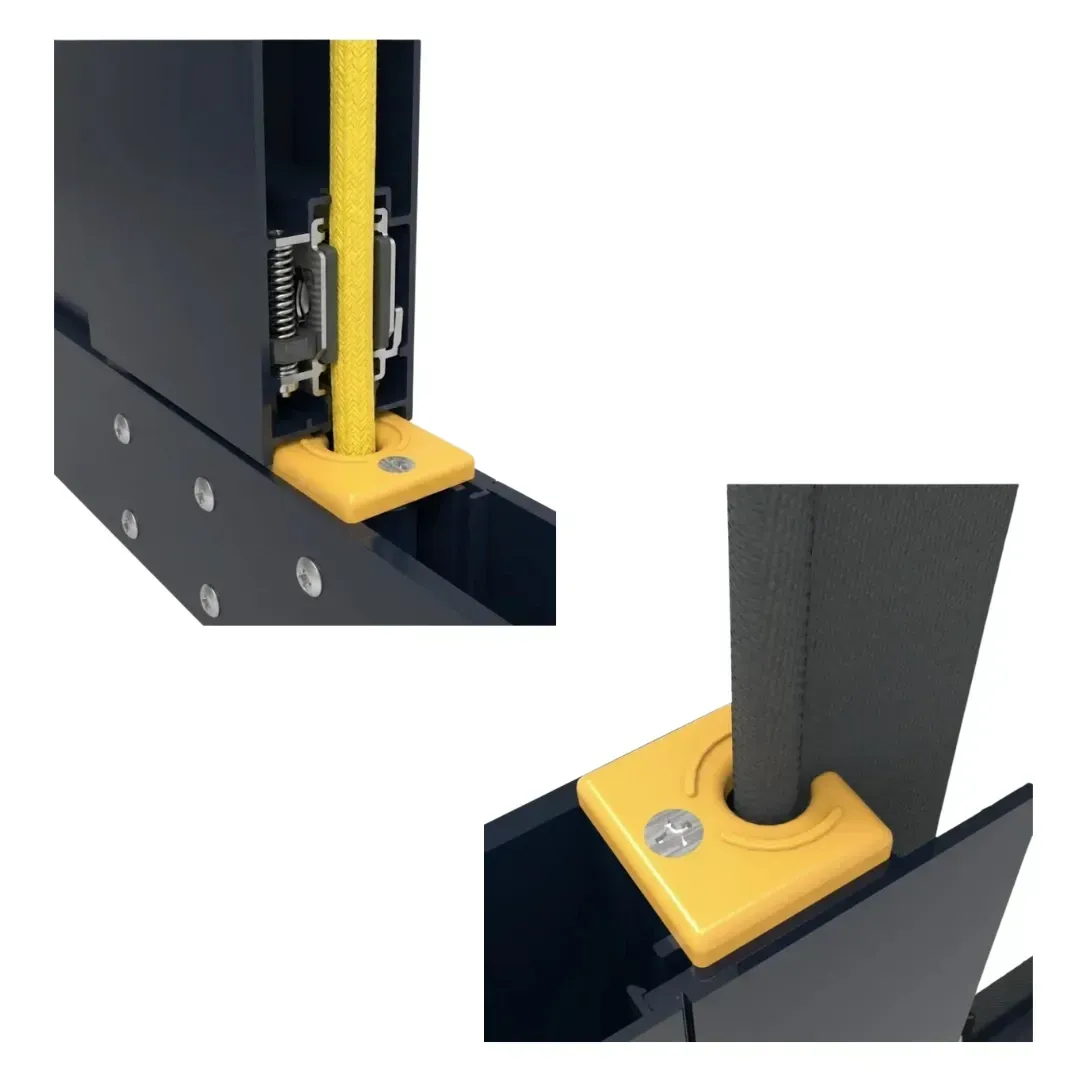
MaxForce™ hurricane screen welded keder edge entering the side track through a track-top fitting

Welded keder edge

The screen edge is welded to a keder that rides in the side track. No zipper and no stitching.

MaxForce™ screen pre-feeder guiding hurricane fabric from the reel into the side track

Screen pre-feeder

A guide at the top of each track feeds the descending screen smoothly from the reel into the side track. With a Fenetex® Smart Motor™, the motor stops downward travel before the screen can leave the tracks.

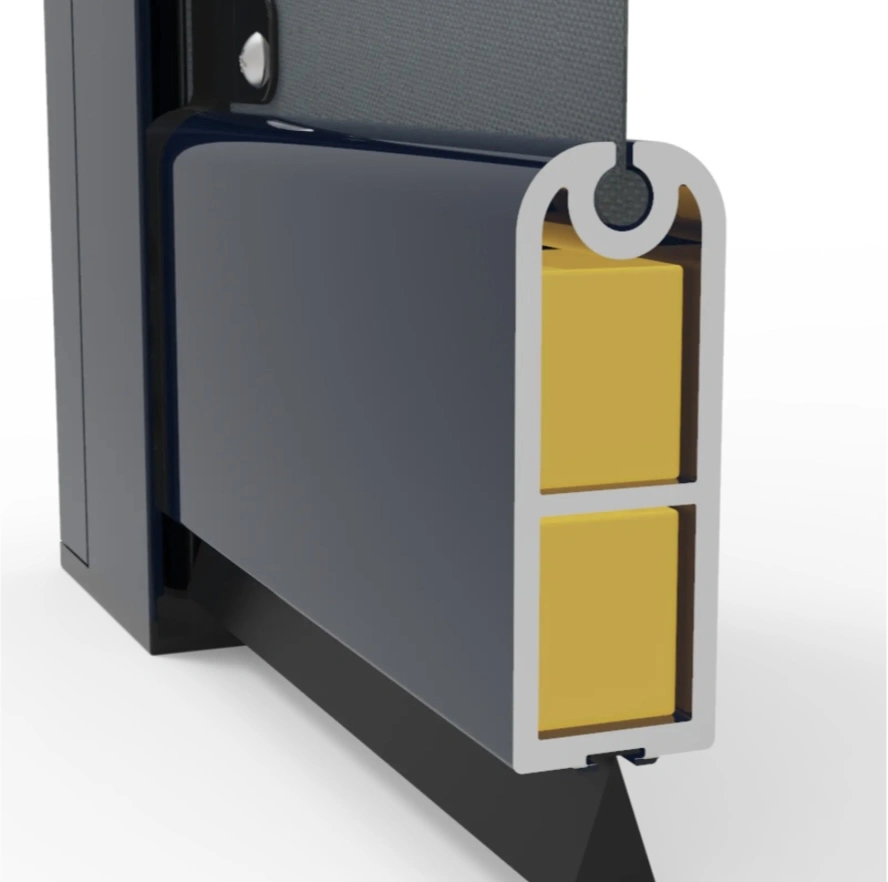
Cross-section of the MaxForce™ heavy weight bar with two steel weight cavities, built in Jacksonville, Florida

Heavy weight bar

A heavy bottom bar with two cavities for steel weights, for screens installed in windy locations.

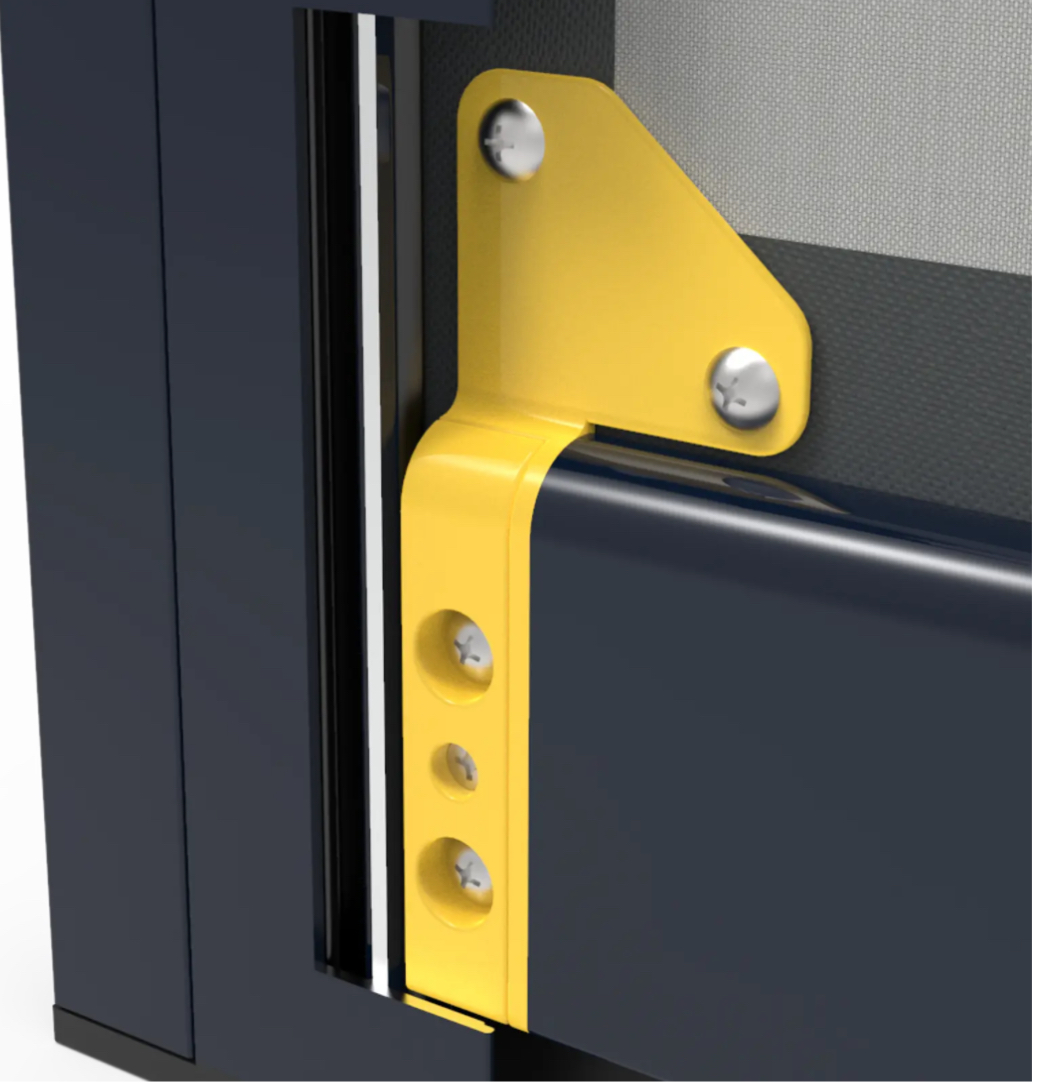
MaxForce™ reinforced nylon corner bolted to the weight bar and hurricane screen track

Reinforced corners

A flexible guide of toughened nylon ties the weight bar and screen together, reinforcing the corner where wear concentrates.

Mounting options

Because hurricane protection systems must withstand extreme forces, proper product selection and installation are essential to achieving their approved performance ratings. All MaxForce™ Hurricane Screens must be installed in accordance with the applicable Florida Product Approval, approved installation drawings, anchoring requirements and local building codes. Installation must be performed to the approval by a trained, authorized MaxForce™ dealer.

MaxForce™ hurricane screen wall mount track icon

Wall mount

Track fastened to the face of the wall beside the opening.

MaxForce™ hurricane screen inset mount track icon

Inset mount

Track set inside the opening, on a tube or angle.

MaxForce™ hurricane screen alternate inset mount icon

Alternate inset

A second inset detail for openings with different jamb conditions.

MaxForce™ hurricane screen build-out mount track icon

Build-out mount

Track on an aluminum build-out tube where the wall needs depth.

Approved substrates

Concrete

Grout-filled block

Hollow block

Wood

Steel

Steel

Wide openings and second screens

Openings wider than one screen use end and interior mullions. A separate everyday insect or shade screen track can attach to the hurricane track; its anchors sit outside the hurricane calculations.

Motors and controls

What motors and controls run MaxForce™ screens?

Three motor brands

The motor is specified for each screen when it is ordered, matched to its size and use.

Stops on contact

Every motor brand used on MaxForce™ has obstacle detection: the screen stops if it meets an obstruction.

App and home automation

A handheld remote comes with every motor. Add the phone app through a Bond Bridge Pro hub, voice control with Alexa or Google Assistant, or run screens through Control4, Crestron or Savant. Each screen operates independently.

Warranty

What does the MaxForce™ warranty cover?

MaxForce™ is covered by the Fenetex® Limited Lifetime Warranty, which covers defects in materials and workmanship. Each part has its own term.

Source: Fenetex® warranty, revision 03.08.2023.
PartTermFine print
Aluminum (extruded, fabricated, cast), proprietary components, welded screen seams Lifetime Lifetime means while the system or a compatible system is in production and parts are available.
Fenetex® Smart Motors™ and operators 5 years Somfy motors carry Somfy’s own 5-year warranty.
Non-electronic, non-proprietary components 5 years Against manufacturing defects.
Standard paint finishes 5 years, or 3 years within 1 mile of a coastline Custom finishes excluded. A claim applies when more than 20% of the painted area is affected.
Hurricane fabric 10 years, UV stability Covers significant loss of strength, discoloration, or the screen becoming unserviceable from UV exposure.

Storm damage is an insurance matter, not a warranty claim
The Fenetex® Limited Lifetime Warranty covers defects in materials and workmanship. It does not cover damage, deterioration or accelerated wear caused by wind, storms, severe weather, or prolonged or repeated exposure to wind and other environmental conditions. It also excludes damage from water, fire, corrosion, mold or mildew, wear and tear, and acts of God. Published wind-performance information does not constitute a warranty against wind or weather-related damage or expand the coverage provided by the warranty. Talk to your homeowners insurer about storm coverage.

Two fabric warranties, one for you

Twitchell warrants OmegaTex™ for 15 years to the company that buys the fabric, which is Fenetex®. Your coverage on the fabric comes from Fenetex®.

  1. Twitchell15-year limited warranty, to the material buyer
  2. Fenetex®Builds the screen; holds the fabric warranty
  3. You10-year fabric coverage from Fenetex®

Keeping coverage valid

Clean the fabric at least twice a year. Sponge with one cup of mild detergent and one cup of household bleach in three gallons of water, rinse with clear water and air-dry. Do not use abrasive cleaners.

Failure to install in accordance with the applicable Florida Product Approval, approved installation drawings, anchoring requirements and local building codes may compromise the screen system’s performance and may affect warranty coverage under the Fenetex® Limited Lifetime Warranty.

Making a claim

Coverage belongs to the original owner and does not transfer when the home is sold. Claims are made in writing to Fenetex®; the claimant covers shipping and installation, and Fenetex® decides whether to repair or replace.

MAXFORCE™ MOTORIZED HURRICANE SCREEN

Protect Your Home with Coverage You Can Read

A dealer walks you through the warranty, the installation and how to register your system.

Field record

How have MaxForce™ screens performed in real storms?

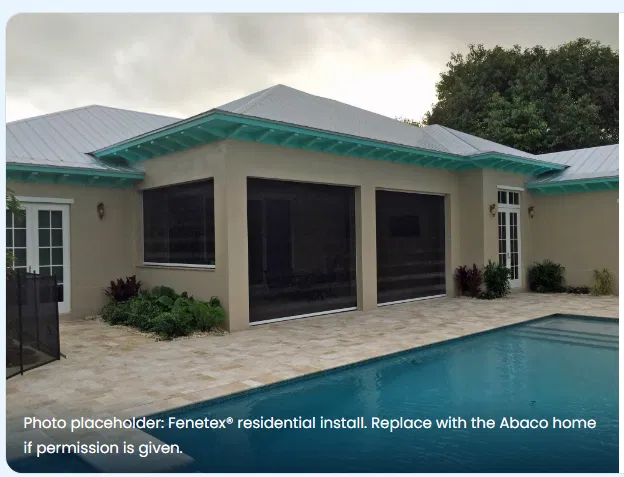
Single-storey beachfront home with MaxForce™ hurricane screens lowered over the openings beside a pool
Hurricane Dorian, 2019. Legacy fixed-track MaxForce™. Photo courtesy of Fenetex®.

A beachfront home on Great Abaco

Fenetex® customer Shawn Fay’s home sits on the beach on Great Abaco in the Bahamas. After Hurricane Dorian, he reported that his MaxForce™ screens were still in place while metal roll shutters on neighbouring homes had torn away. Several neighbours later installed MaxForce™ on their own homes.

Owner-reported outcome on the fixed-track system that preceded Quiet Spring Technology™. No wind speed was measured at the home.

"We were able to combine both our sun and shade as well as the hurricane protection all with one product."

Jennifer R., Naples, Florida

Frequently Asked Questions

MaxForce™ hurricane screen FAQs

Is MaxForce™ approved for use in Miami-Dade County?

Yes. MaxForce™ Hurricane Screens are approved for use in Miami-Dade County and the High-Velocity Hurricane Zone (HVHZ) under Florida Product Approval FL8637-R15, demonstrating compliance with applicable Florida Building Code requirements for approved configurations. Each installation must follow the approval, approved installation drawings, anchoring requirements and local building codes.

Is MaxForce™ built for 185 MPH winds?

It describes the wind zone covered by the FL8637-R15 approval. It is not a wind speed the screen is guaranteed to withstand. Building codes evaluate wind resistance by design pressure, not wind speed. MaxForce™ is rated for design pressures of up to ±200 PSF, and the allowable pressure for each screen depends on its size, configuration and approved installation conditions.* See the Fenetex® Wind Statement for details.

What is the difference between tested and approved?

Tested means a laboratory measured performance against a standard. Approved means a jurisdiction accepted those results as meeting its building code. FL8637-R15 is an approval.

How does Quiet Spring Technology™ work?

Springs inside the side track press outward on the screen edge, keeping it at even tension with nearly an inch of self-adjustment. A gust compresses the springs; they return the track when it passes.

Do I need to replace my existing MaxForce™ system to get Quiet Spring Technology™?

No. The self-adjusting track works with existing MaxForce™ systems. A MaxForce™ dealer can confirm what your openings need.

Is Quiet Spring Technology™ patented?

Fenetex® describes Quiet Spring Technology™ as patented, and the MaxForce™ hurricane track is patent pending.

What is OmegaTex™ fabric made of?

Current OmegaTex™ uses vinyl-coated polyester core yarns in one direction and vinyl-coated Kevlar® core yarns in the other, in a weave that is 91% cover and 9% open.

Does the MaxForce™ warranty cover hurricane damage?

No. The Fenetex® Limited Lifetime Warranty covers defects in materials and workmanship. It does not cover damage, deterioration or accelerated wear caused by wind, storms, severe weather, or prolonged or repeated exposure to wind. Wind-related wear and damage are not manufacturing defects. Storm damage is a homeowners insurance matter.

Can I transfer the warranty if I sell my home?

No. The Fenetex® Limited Lifetime Warranty belongs to the original owner and does not transfer to later owners.

How do I clean MaxForce™ screens?

At least twice a year, sponge the fabric with one cup of mild detergent and one cup of household bleach in three gallons of water, rinse with clear water and air-dry. Avoid abrasive cleaners.

Can MaxForce™ be used every day, not just in storms?

Yes. MaxForce™ can be used year-round for shade, insect control and weather protection, and deployed the same way when a storm approaches. Like any product exposed to the elements, it provides the best long-term performance when used with reasonable care and good judgment. Its strength should not be interpreted as an invitation to leave it deployed unnecessarily during prolonged periods of high winds or severe weather. Repeated or prolonged exposure to wind can accelerate wear on the fabric, retention system, tracks and other components. Wind resistance is a measure of strength and capability, not a guarantee against the effects of continued exposure.

How is MaxForce™ different from magnetic track screens?

MaxForce™ holds tension with springs, whose force rises evenly as they compress. Magnetic tracks rely on magnets, whose pull climbs sharply as they close and which snap back together after a gust.

Who confirms an installation meets code at my address?

The approval is not site-specific. A design professional applies it to your openings, and your local building department permits and inspects the installation.

MAXFORCE™ MOTORIZED HURRICANE SCREEN

Find an Authorized MaxForce™ Dealer

A dealer measures each opening, specifies the mount and motor, and schedules your installation.

Sources

1. Florida Product Approval FL8637-R15 and FL 8637.1 installation drawings, Engineering Express, rev. April 2026.

2. Fenetex®, "Introducing MaxForce™ Hurricane Screen with Quiet Spring Technology™", June 2026.

3. Fenetex®, "Why Springs Outperform Magnets", December 2025.

4. Fenetex® warranty, revision 03.08.2023.

5. Twitchell Technical Products, OmegaTex™ technical data (January 2025) and warranty (May 2025).

6. Fenetex®, "MaxForce Hurricane Tracks vs. Hurricane Dorian", September 2025.

MaxForce™ Hurricane Screens are a Fenetex® product, featuring Quiet Spring Technology™, approved for use in Miami-Dade County and the HVHZ under Florida Product Approval FL8637-R15.

MaxForce™ hurricane screens: approvals, specifications and warranty

Quick answer

MaxForce™ hurricane screens are motorized retractable screens approved for use in Miami-Dade County and the High-Velocity Hurricane Zone (HVHZ) under Florida Product Approval FL8637-R15, where design wind zones can reach 185 MPH.* They are approved for specific configurations, with design pressure ratings of up to ±200 PSF depending on screen size, configuration and approved installation conditions.* Since 2026 they use Quiet Spring Technology™, a spring-tensioned track with nearly an inch of self-adjustment, and OmegaTex™ fabric made with Kevlar® fiber.

*See the Fenetex® Wind Statement for details.

FL8637-R15Florida Product Approval
Up to ±200 PSF*Design pressure, varies by screen size, configuration and installation
Quiet Spring Technology™Self-adjusting spring-tensioned track
Large missile impactTested to Missile Level D, Wind Zone 4
Approval

How is MaxForce™ approved for hurricane zones?


MaxForce™ Hurricane Screens hold Florida Product Approval FL8637-R15, demonstrating compliance with applicable Florida Building Code requirements for approved configurations. Florida Product Approvals are issued through the Florida Building Commission's product approval system, and R15 is the approval's current revision.

Under Florida Statute §553.842, a Florida Product Approval carrying HVHZ designation is a valid path to code compliance in the HVHZ. A Miami-Dade Notice of Acceptance is one route; it is not the only one.

The HVHZ covers Miami-Dade and Broward counties.

View Florida Product Approval FL8637-R15

Download the FL8637-R15 installation instructions (PDF)

Why the drawings say "FL 8637.1". FL8637 is the approval; ".1" identifies the product listing within it. If you search BCIS for MaxForce™ installation drawings, that is the number you will see on each sheet.
MaxForce™ self-adjusting spring retention track closeup
TermWhat it means
TestedA laboratory measured how the product performed against a named standard. A test result alone is not code compliance.
ApprovedA jurisdiction has accepted the test results as meeting its building code. FL8637-R15 is an approval.
CertifiedA general marketing term, not an instrument Florida issues for opening protection. MaxForce™'s instrument is Florida Product Approval FL8637-R15.
Testing

What tests does a hurricane screen have to pass?


MaxForce™ Hurricane Screens undergo independent laboratory testing designed to evaluate their ability to withstand the forces and impacts associated with hurricane conditions. Testing includes Florida/Miami-Dade protocols (TAS 201, 202 and 203) and applicable ASTM standards (E1886, E1996 and E330). It evaluates three performance characteristics: large-missile impact resistance, uniform static air pressure resistance, and cyclic wind pressure resistance. Successful completion of the applicable testing demonstrates the system’s ability to provide hurricane protection under the specified test conditions.

StandardWhat it isIn plain terms
TAS 201Miami-Dade impact test protocolA large wooden missile is fired at the product to simulate windborne debris.
TAS 202Uniform static air pressure testSteady pressure pushes on, then pulls on, the product, the way wind loads the front and back of a building.
TAS 203Cyclic wind pressure loadingSubjects the screen system to repeated positive and negative pressure cycles to evaluate its ability to maintain performance under fluctuating wind loads associated with hurricane conditions.
ASTM E1886National test method for impact and cyclic pressureThe national procedure for running the missile and cycling tests.
ASTM E1996National specification for missile levels and wind zonesSets which missile and how much cycling a product must survive for a given location.
ASTM E330Structural performance under static air pressureMeasures how the product holds up under a uniform load.

Source: FL 8637.1 installation drawings, general notes. Florida Building Code 8th Edition (2023).

Missile Level D, Wind Zone 4. These are ASTM E1996 classifications for the test missile and the pressure cycling used. They describe how MaxForce™ was tested. They are not a wind speed the screen withstands.
Design pressure

What design pressure is MaxForce™ rated for?


While hurricane strength is commonly described in terms of wind speed, building codes and structural engineers evaluate the wind resistance of building products using design pressure, measured in pounds per square foot (PSF).

MaxForce™ Hurricane Screens have design pressure ratings of up to ±200 PSF, covering both positive pressure (wind pushing against the screen) and negative pressure (wind suction pulling away from the screen). The allowable design pressure depends on the specific screen size, configuration and approved installation conditions.*

*See the Fenetex® Wind Statement for details.

Wind loads vary with the building and the location of the opening. Before a hurricane screen is specified, the required design pressure must be calculated from:

  • geographic location and applicable design wind speed
  • building height, dimensions and roof configuration
  • exposure category, including surrounding terrain and proximity to open water
  • location of the opening on the building, including proximity to corners and roof edges
  • applicable building code requirements

These calculations set the positive and negative design pressures the system must resist.

Fenetex® provides engineering tables identifying allowable design pressures for different screen dimensions, together with approved mounting configurations and anchoring requirements. Architects, engineers, contractors and building officials use them to verify that the selected system meets the structural requirements for each opening.

The FL8637-R15 schedules cover screens up to 252 inches (21 feet) tall and spans up to 300 inches (25 feet). Those are the limits of the approval, not what every opening can take.

Wide openings are divided with end and interior mullions, each sized from its own schedule.

Your site, your engineer. The approval is a non-site-specific evaluation. A design professional is responsible for applying it to each actual installation, an authorized MaxForce™ dealer installs to the approval, and your local building department permits and inspects the work.
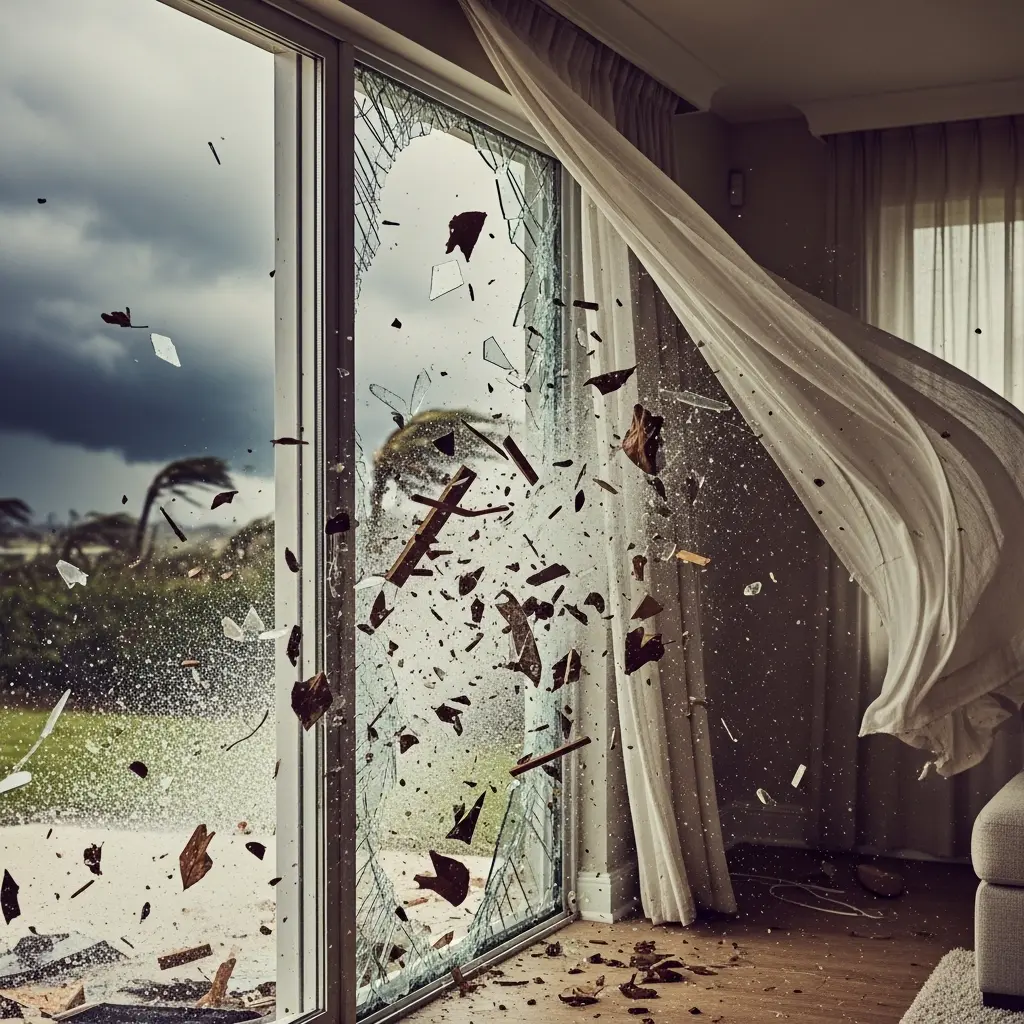
Wide outdoor opening protected by a MaxForce™ hurricane screen
Illustrative only. MaxForce™ is rated up to ±200 PSF; allowable design pressure depends on screen size, configuration and approved installation conditions.
MAXFORCE™ MOTORIZED HURRICANE SCREEN

Contact an Authorized MaxForce™ Dealer Today


Every opening gets its own span, mount and design pressure. A dealer measures yours and specifies the screen to the approval.

Get started with an authorized dealer
Quiet Spring Technology™

How does Quiet Spring Technology™ work?


In 2026 MaxForce™ moved from a fixed track to a self-adjusting one. Springs inside the side track press outward on the screen edge, holding it at even tension with nearly an inch of total self-adjustment. When a gust pushes the screen, the inner track compresses against the springs; when the gust passes, the springs return it.

It is the same spring tensioning One-Track™ screens have used since 2020, now built into the hurricane track.

Why springs, not magnets

Spring force rises in proportion to how far the spring is compressed (Hooke's Law), so tension is predictable across the full range of travel. Magnet force climbs sharply as the gap closes: magnets pulled apart by wind snap back together with nothing to slow them.

"The closer they get together, the stronger they pull."

Michael Murray, Fenetex® Co-Founder and President, on magnetic tensioning
Already own MaxForce™? The self-adjusting track works with existing MaxForce™ systems, so an upgrade does not mean replacing the whole installation. Your dealer can confirm for your openings. Building updates that work with earlier installations is one of the seven principles of Fenetex® Blue™, the design philosophy behind every Fenetex® product.
Spring inside a MaxForce™ Quiet Spring side track
Spring inside the side track
Cross-section of the MaxForce™ Quiet Spring track profile
Quiet Spring track profile
BehaviourSpringsMagnets
ForceRises evenly with compressionClimbs sharply as the gap closes
Under a gustCompresses and returns smoothlySeparates, then snaps back together
Adjusting tensionAdd or remove springs, no special toolsReposition magnet arrays along the track
Corrosion exposureNo magnets in the trackIron-based magnets rely on a protective coating
Keder edge

What is a keder, and why does it keep the screen in its track?


A keder is a PVC cord wrapped in low-friction, PVC-coated fabric, welded along the screen's edge. Fenetex® has used welded keder edges since its first screens in 2007. With approximately 20 years of experience manufacturing hurricane screens, Fenetex® has refined MaxForce™ for demanding coastal environments.

Step 1 of the MaxForce™ keder welding process: cut and insert

Cut and insert

A precisely cut screen edge is inserted into the keder.

Step 2 of the MaxForce™ keder welding process: clamp

Clamp

Welding bars above and below close on the materials at a set pressure.

Step 3 of the MaxForce™ keder welding process: radio-frequency weld

Weld

10 kW of radio-frequency energy is pulsed through the PVC, heating it from within so keder and screen fuse.

Step 4 of the MaxForce™ keder welding process: set under pressure

Set

A cooling phase under pressure sets the weld into a single piece.

Why it stays in the track

The keder bead rides inside a channel whose opening is narrower than the bead. Under wind load, the screen pulls against the inner channel, but the bead cannot pass through the slot. With Quiet Spring Technology™, the spring tension in the track allows the inner track to move forward and absorb external pressure on the fabric.

Because the edge is welded, there is no zipper to break, no stitching to wear and no adhesive to fail.

How the MaxForce™ track holds the screen under wind load Cross-section of the MaxForce™ Quiet Spring side track. Wind pulls on the screen, and the keder bead presses against the slot of the inner track's round channel. The inner track then slides forward against the Quiet Spring and locks into the grooves at the front of the outer track. With the track locked, the screen takes the wind load and bows. When the wind passes, the spring returns the inner track. Bead presseson the slot Inner track locksinto the grooves Wind Outer track Inner track Quiet Spring Keder bead Screen
Cross-section of the MaxForce™ Quiet Spring side track, traced from a cut sample. Movement is simplified.
MAXFORCE™ MOTORIZED HURRICANE SCREEN

Already Own MaxForce™? Ask About Quiet Spring


The self-adjusting track works with existing MaxForce™ systems. A dealer can tell you what your openings need.

Talk to an authorized dealer
Comparison

How do motorized screen tensioning systems compare?


How each type of track holds a screen under load. Use these criteria to evaluate any system you are considering.

SystemHow tension is heldSelf-adjustmentUnder a gustField adjustmentCorrosion exposureHurricane approvalPatent statusWorks with earlier systems
MaxForce™ with Quiet Spring (2026)Springs inside the track press outward on the screen edgeNearly 1 inchCompresses and returns; no snapAdd or remove springsNo magnets in the trackFL8637-R15, HVHZTrack patent pendingYes, existing MaxForce™ systems
MaxForce™ fixed track (legacy)Fixed track holds the edge rigidlyNoneTrack holds; no travelNot applicableNo magnets in the trackFL8637-R14 (superseded by R15), HVHZSee Fenetex® patentsUpgradable to the self-adjusting track
Magnetic self-tensioning tracksNeodymium magnets pull the edge into positionVaries by productMagnets separate, then snap back togetherReposition magnet arraysIron-based magnets protected by a coatingCheck that product’s approvalVariesCheck the manufacturer
Non-adjusting tracks (zipper or fixed)Zipper or fixed retentionNoneFabric carries the load directlyNot applicableVariesCheck that product’s approvalVariesCheck the manufacturer

Mechanism descriptions from Fenetex® engineering publications, as of October 2026. Other products vary; check each manufacturer’s documents.

Standard features

What features come standard on MaxForce™ hurricane screens?


FeatureWhat it means
Florida Product ApprovalFL8637-R15 with HVHZ designation, for approved configurations.
Self-adjusting trackQuiet Spring Technology™ keeps the screen flat with nearly an inch of travel
Welded keder edgeNo zipper; the screen edge is RF-welded to the keder
No hurricane clipsNo extra clips or retainers needed for storm deployment
MotorizedThree motor brands, specified for each order
Obstacle detectionEvery motor brand stops on contact
Home automationHandheld remote with every motor; phone app via Bond Bridge Pro hub; Alexa, Google Assistant, Control4, Crestron, Savant
Built to orderMade to fit each opening exactly
Works with existing systemsThe self-adjusting track fits existing MaxForce™ installations
Heavy weight barTwo cavities for steel weights, for windy locations
Screen pre-feederGuides the screen from the reel into the side track; a Fenetex® Smart Motor™ stops descent before the screen can leave the tracks
Contour cutBottom edge cut to match sloped floors
Reinforced cornersToughened nylon guide ties the weight bar and screen together
Automatic wind deploymentDeploys from a wind sensor, so screens are down before a storm arrives
OmegaTex™ fabric

What is MaxForce™ hurricane fabric made of?


MaxForce™ uses OmegaTex™ hurricane screen fabric, woven in Dothan, Alabama by Twitchell Technical Products. Current OmegaTex™ combines vinyl-coated 1500-denier polyester core yarns in one direction with vinyl-coated 2000-denier Kevlar® core yarns in the other. Screens made before 2025 may use an earlier yarn.

The weave is 91% cover and 9% open: solid enough to stop debris, open enough to see through and let air move. It blocks up to 91% of UV rays.

The fabric meets NFPA 701 and NFPA 101 Class A fire standards, carries GREENGUARD Gold for low emissions, and passes ASTM E2180 and G21 for bacteria and fungal resistance. These are standards for the fabric itself.

Colors

White
White/Tan
Black/Tan
Black
Granite
Bronze
Manufacturer-reported results from single test samples, not specifications. Source: Twitchell OmegaTex™ technical data, January 2025.
PropertyTypical value
Weight19.5 oz/yd²
Grab tensile strength711.3 lbf warp, 748.9 lbf fill
Puncture resistance364 lbf
Bursting strength1,250+ psi
Openness9% open, 91% cover
Weave22 × 13.5

Kevlar® is a trademark of affiliates of DuPont de Nemours, Inc. OmegaTex™ is a trademark of Twitchell Technical Products, LLC.

MAXFORCE™ MOTORIZED HURRICANE SCREEN

See OmegaTex™ Colors in Person


Six fabric colors, built to order for each opening. Ask a dealer for samples and a quote.

Request a quote from a dealer
Construction

How is a MaxForce™ hurricane screen built and mounted?


Each screen is built to order for its opening in Jacksonville, Florida, from a storage hood, roll-up assembly, Quiet Spring side tracks, welded screen and weight bar.

MaxForce hurricane screen edge held in the self-adjusting side track

Welded keder edge

The screen edge is welded to a keder that rides in the side track. No zipper and no stitching.

MaxForce™ Keder Edge Zipperless Hurricane Screen Track Closeup

Screen pre-feeder

A guide at the top of each track feeds the descending screen smoothly from the reel into the side track. With a Fenetex® Smart Motor™, the motor stops downward travel before the screen can leave the tracks.

Cross section of the MaxForce hurricane screen weight bar

Heavy weight bar

A heavy bottom bar with two cavities for steel weights, for screens installed in windy locations.

Reinforced corner where the MaxForce weight bar meets the side track

Reinforced corners

A flexible guide of toughened nylon ties the weight bar and screen together, reinforcing the corner where wear concentrates.

Mounting options

Because hurricane protection systems must withstand extreme forces, proper product selection and installation are essential to achieving their approved performance ratings. All MaxForce™ Hurricane Screens must be installed in accordance with the applicable Florida Product Approval, approved installation drawings, anchoring requirements and local building codes. Installation must be performed to the approval by a trained, authorized MaxForce™ dealer.

MaxForce™ hurricane screen wall mount track icon

Wall mount

Track fastened to the face of the wall beside the opening.

MaxForce™ hurricane screen inset mount track icon

Inset mount

Track set inside the opening, on a tube or angle.

MaxForce™ hurricane screen alternate inset mount icon

Alternate inset

A second inset detail for openings with different jamb conditions.

MaxForce™ hurricane screen build-out mount track icon

Build-out mount

Track on an aluminum build-out tube where the wall needs depth.

Approved substrates

  • Concrete
  • Grout-filled block
  • Hollow block
  • Wood
  • Steel

Wide openings and second screens

Openings wider than one screen use end and interior mullions. A separate everyday insect or shade screen track can attach to the hurricane track; its anchors sit outside the hurricane calculations.

Motors and controls

What motors and controls run MaxForce™ screens?


Three motor brands

The motor is specified for each screen when it is ordered, matched to its size and use.

Stops on contact

Every motor brand used on MaxForce™ has obstacle detection: the screen stops if it meets an obstruction.

App and home automation

A handheld remote comes with every motor. Add the phone app through a Bond Bridge Pro hub, voice control with Alexa or Google Assistant, or run screens through Control4, Crestron or Savant. Each screen operates independently.

Warranty

What does the MaxForce™ warranty cover?


MaxForce™ is covered by the Fenetex® Limited Lifetime Warranty, which covers defects in materials and workmanship. Each part has its own term.

Source: Fenetex® warranty, revision 03.08.2023.
PartTermFine print
Aluminum (extruded, fabricated, cast), proprietary components, welded screen seamsLifetimeLifetime means while the system or a compatible system is in production and parts are available.
Fenetex® Smart Motors™ and operators5 yearsSomfy motors carry Somfy’s own 5-year warranty.
Non-electronic, non-proprietary components5 yearsAgainst manufacturing defects.
Standard paint finishes5 years, or 3 years within 1 mile of a coastlineCustom finishes excluded. A claim applies when more than 20% of the painted area is affected.
Hurricane fabric10 years, UV stabilityCovers significant loss of strength, discoloration, or the screen becoming unserviceable from UV exposure.
Storm damage is an insurance matter, not a warranty claimThe Fenetex® Limited Lifetime Warranty covers defects in materials and workmanship. It does not cover damage, deterioration or accelerated wear caused by wind, storms, severe weather, or prolonged or repeated exposure to wind and other environmental conditions. It also excludes damage from water, fire, corrosion, mold or mildew, wear and tear, and acts of God. Published wind-performance information does not constitute a warranty against wind or weather-related damage or expand the coverage provided by the warranty. Talk to your homeowners insurer about storm coverage.

Two fabric warranties, one for you

Twitchell warrants OmegaTex™ for 15 years to the company that buys the fabric, which is Fenetex®. Your coverage on the fabric comes from Fenetex®.

  1. Twitchell15-year limited warranty, to the material buyer
  2. Fenetex®Builds the screen; holds the fabric warranty
  3. You10-year fabric coverage from Fenetex®

Keeping coverage valid

Clean the fabric at least twice a year. Sponge with one cup of mild detergent and one cup of household bleach in three gallons of water, rinse with clear water and air-dry. Do not use abrasive cleaners.

Failure to install in accordance with the applicable Florida Product Approval, approved installation drawings, anchoring requirements and local building codes may compromise the screen system’s performance and may affect warranty coverage under the Fenetex® Limited Lifetime Warranty.

Making a claim

Coverage belongs to the original owner and does not transfer when the home is sold. Claims are made in writing to Fenetex®; the claimant covers shipping and installation, and Fenetex® decides whether to repair or replace.

MAXFORCE™ MOTORIZED HURRICANE SCREEN

Know Exactly What Your Warranty Covers


A dealer walks you through the warranty, the installation and how to register your system.

Get started with an authorized dealer
Field record

How have MaxForce™ screens performed in real storms?


Single-storey beachfront home with MaxForce™ hurricane screens lowered over the openings beside a pool
Hurricane Dorian, 2019. Legacy fixed-track MaxForce™

A beachfront home on Great Abaco

Fenetex® customer Shawn Fay’s home sits on the beach on Great Abaco in the Bahamas. After Hurricane Dorian, he reported that his MaxForce™ screens were still in place while metal roll shutters on neighbouring homes had torn away. Several neighbours later installed MaxForce™ on their own homes.

Owner-reported outcome on the fixed-track system that preceded Quiet Spring Technology™. No wind speed was measured at the home.

"We were able to combine both our sun and shade as well as the hurricane protection all with one product."

Jennifer R., Naples, Florida
Frequently Asked Questions

MaxForce™ hurricane screen FAQs


Is MaxForce™ approved for use in Miami-Dade County?

Yes. MaxForce™ Hurricane Screens are approved for use in Miami-Dade County and the High-Velocity Hurricane Zone (HVHZ) under Florida Product Approval FL8637-R15, demonstrating compliance with applicable Florida Building Code requirements for approved configurations. Each installation must follow the approval, approved installation drawings, anchoring requirements and local building codes.

What does "rated for the 185 MPH wind zone" mean?

It describes the wind zone covered by the FL8637-R15 approval. It is not a wind speed the screen is guaranteed to withstand. Building codes evaluate wind resistance by design pressure, not wind speed. MaxForce™ is rated for design pressures of up to ±200 PSF, and the allowable pressure for each screen depends on its size, configuration and approved installation conditions.* See the Fenetex® Wind Statement for details.

What is the difference between tested and approved?

Tested means a laboratory measured performance against a standard. Approved means a jurisdiction accepted those results as meeting its building code. FL8637-R15 is an approval.

How does Quiet Spring Technology™ work?

Springs inside the side track press outward on the screen edge, keeping it at even tension with nearly an inch of self-adjustment. A gust compresses the springs; they return the track when it passes.

Do I need to replace my existing MaxForce™ system to get Quiet Spring Technology™?

No. The self-adjusting track works with existing MaxForce™ systems. A MaxForce™ dealer can confirm what your openings need.

Is Quiet Spring Technology™ patented?

Fenetex® describes Quiet Spring Technology™ as patented, and the MaxForce™ hurricane track is patent pending.

What is OmegaTex™ fabric made of?

Current OmegaTex™ uses vinyl-coated polyester core yarns in one direction and vinyl-coated Kevlar® core yarns in the other, in a weave that is 91% cover and 9% open.

Does the MaxForce™ warranty cover hurricane damage?

No. The Fenetex® Limited Lifetime Warranty covers defects in materials and workmanship. It does not cover damage, deterioration or accelerated wear caused by wind, storms, severe weather, or prolonged or repeated exposure to wind. Wind-related wear and damage are not manufacturing defects. Storm damage is a homeowners insurance matter.

Can I transfer the warranty if I sell my home?

No. The Fenetex® Limited Lifetime Warranty belongs to the original owner and does not transfer to later owners.

How do I clean MaxForce™ screens?

At least twice a year, sponge the fabric with one cup of mild detergent and one cup of household bleach in three gallons of water, rinse with clear water and air-dry. Avoid abrasive cleaners.

Can MaxForce™ be used every day, not just in storms?

Yes. MaxForce™ can be used year-round for shade, insect control and weather protection, and deployed the same way when a storm approaches. Like any product exposed to the elements, it provides the best long-term performance when used with reasonable care and good judgment. Its strength should not be interpreted as an invitation to leave it deployed unnecessarily during prolonged periods of high winds or severe weather. Repeated or prolonged exposure to wind can accelerate wear on the fabric, retention system, tracks and other components. Wind resistance is a measure of strength and capability, not a guarantee against the effects of continued exposure.

How is MaxForce™ different from magnetic track screens?

MaxForce™ holds tension with springs, whose force rises evenly as they compress. Magnetic tracks rely on magnets, whose pull climbs sharply as they close and which snap back together after a gust.

Who confirms an installation meets code at my address?

The approval is not site-specific. A design professional applies it to your openings, and your local building department permits and inspects the installation.

MAXFORCE™ MOTORIZED HURRICANE SCREEN

Find an Authorized MaxForce™ Dealer


A dealer measures each opening, specifies the mount and motor, and schedules your installation.

Find an authorized dealer near you
Sources
  1. Florida Product Approval FL8637-R15 and FL 8637.1 installation drawings, Engineering Express, rev. April 2026.
  2. Fenetex®, "Introducing MaxForce™ Hurricane Screen with Quiet Spring Technology™", June 2026.
  3. Fenetex®, "Why Springs Outperform Magnets", December 2025.
  4. Fenetex® warranty, revision 03.08.2023.
  5. Twitchell Technical Products, OmegaTex™ technical data (January 2025) and warranty (May 2025).
  6. Fenetex®, "MaxForce Hurricane Tracks vs. Hurricane Dorian", September 2025.

MaxForce™ Hurricane Screens are a Fenetex® product, featuring Quiet Spring Technology™, approved for use in Miami-Dade County and the HVHZ under Florida Product Approval FL8637-R15.